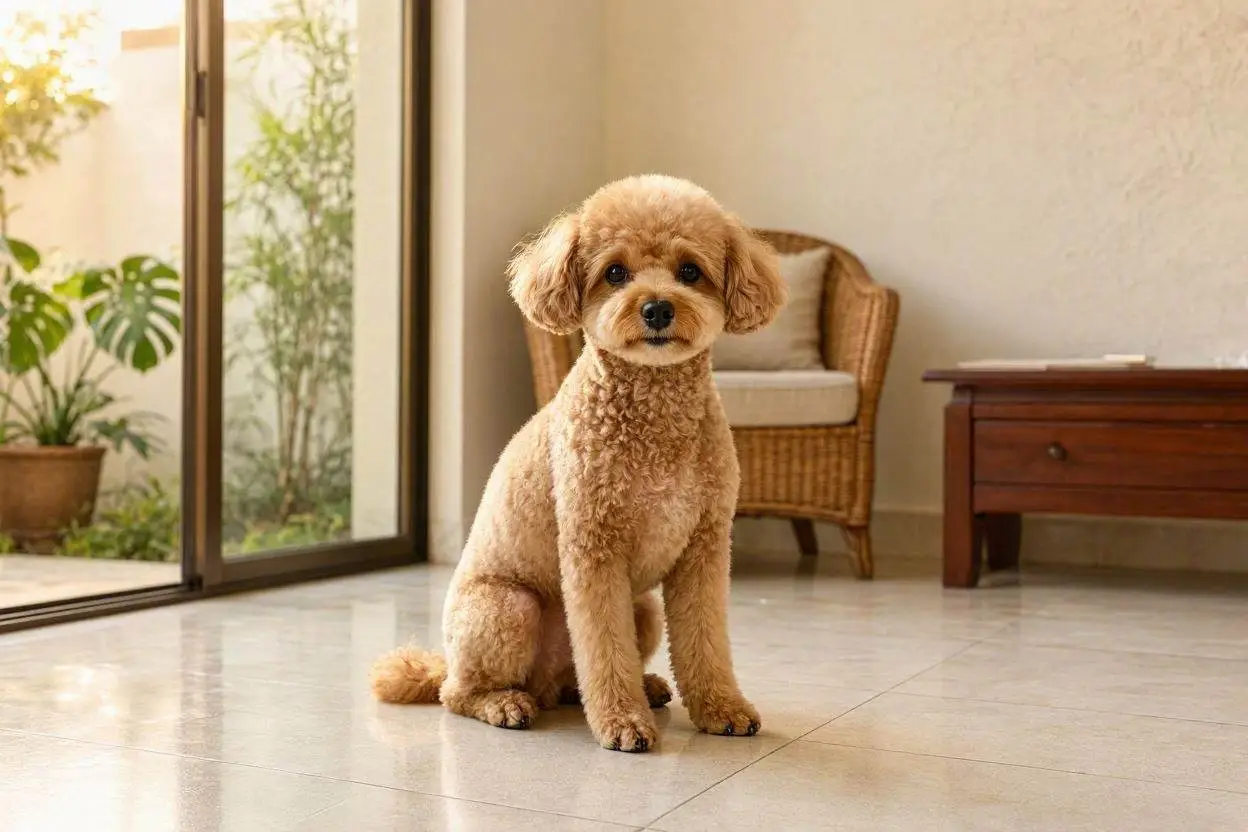
Poodles get unfairly filed under "fancy." Look past the show-ring haircuts and you find one of the most capable dogs there is: whip-smart, athletic, low-shedding, and endlessly trainable. In the Philippines the Toy and Miniature sizes are hugely popular as family companions, and for good reason. But the two headline traits — the curly coat and the remarkable brain — are the two things you have to actively manage. Both are commitments, not just perks. Here's the honest guide.
The coat is the job
If you own a Poodle, you are signing up to groom a Poodle, forever. There's no way around it, so go in clear-eyed. The Poodle's curly coat grows continuously (it's more like hair than fur) and it mats readily, especially in Philippine humidity. Left unbrushed, the coat tangles into tight mats that pull painfully at the skin and trap moisture against it, causing sores and infections. Grooming a Poodle is a welfare issue, not a vanity one.
The routine:
- Professional grooming every 4 to 6 weeks, for life. PH grooming is affordable — full grooms have been reported from around ₱880 — but it's a permanent recurring cost. Plan for it like a utility bill.
- Brush at home several times a week, down to the skin, to prevent mats between grooms.
- Keep a practical short clip. Most sensible PH owners keep a short "poodle cut" rather than an elaborate show trim — it's cooler in the heat, cheaper to maintain, and far kinder than fighting mats in a long coat.
- Ears every week. Poodles grow hair inside the ear canal, which traps moisture and wax and, in our humidity, breeds infections. Ear cleaning (and sometimes plucking, ask your groomer) is a routine part of Poodle care.
- Dry completely after every bath. A damp curly coat is a fungal problem waiting to happen.
"Low-shedding" is not "low-maintenance"
The Poodle's best-known selling point is that it barely sheds, which is why it's a favorite for allergy-prone homes and the parent of every "-doodle" crossbreed. That part is true — the curly coat traps loose hair instead of dropping it on your floor. But here's the catch people miss: that trapped hair is exactly why the coat mats. You're not escaping coat maintenance, you're trading it — vacuuming for grooming. The hair doesn't land on your sofa; it tangles against your dog unless you keep up the brushing and grooming. A Poodle is a wonderful low-shed dog and a high-groom dog at the same time.
The brain needs a job
The other thing to respect is the intelligence. Poodles are consistently ranked among the smartest dog breeds, and that's a double-edged gift. A Poodle that gets training, problem-solving, and real engagement is an astonishingly good companion — quick to learn, eager, attuned to you. A Poodle that's left understimulated gets anxious, barky, and destructive, because a bored genius invents its own entertainment and you won't like the results.
So build mental work into daily life: obedience and trick training (they love it and learn fast), puzzle feeders, hide-and-seek, new routes on walks. This is a breed that genuinely enjoys having a job. The upside of that intelligence is that Poodles are among the easiest dogs to train well — house-training, manners, and even quite advanced tricks come readily if you put in the reps.
Which size Poodle? Toy, Miniature, or Standard
Poodles come in three sizes, and the choice shapes daily life more than the coat color everyone fixates on. They share the same brain, coat, and grooming needs — but the size changes the space, exercise, and handling.
- Toy Poodle — the smallest and by far the most popular in the Philippines. A true lapdog, ideal for condo and apartment living, happy with short walks plus lots of brain games. The trade-off is fragility: little bones and knees, easy to injure with a fall or rough handling, and prone to patellar luxation.
- Miniature Poodle — the middle size and, for many families, the sweet spot: sturdier than a Toy, still apartment-friendly, athletic and quick to train, without a Standard's space and exercise demands.
- Standard Poodle — a genuine big, athletic dog. Wonderful, dignified family dogs, but they need real daily exercise and space, and everything (food, grooming, medication, vet care) costs more at that size. In PH heat, a Standard needs the same cool-hours discipline as any large active breed.
If you're in a condo and want a clever companion, a Toy or Miniature is usually the right call; if you have space, time, and want a substantial dog, the Standard is superb.
Health and choosing a Poodle
Poodles are generally healthy and long-lived, but the breed has a known screening list — which makes where you get one matter.
- Patellar luxation (slipping kneecaps), especially in the Toy and Miniature sizes.
- Eye disorders, including progressive retinal atrophy (PRA).
- Hip and elbow problems, more in Standards.
- Ear infections — the humidity tax on a hairy-eared breed, covered above.
- In some lines, epilepsy and Addison's disease.
A responsible breeder screens their breeding dogs' eyes, patellas, hips, and hearts and can show you the results — ask. Be wary of suspiciously cheap "teacup" Poodles; extreme miniaturization tends to bring fragility. Cover the foundations with a proper first vet visit, the vaccination schedule, deworming, and tick and flea prevention.
Heat, feeding, and exercise
Their single curly coat copes with tropical heat reasonably well when kept in a short clip — and keeping the coat groomed is itself part of heat management, since a matted coat can't let heat escape. Still follow the basics: cool indoors during midday, water and shade always, walks in the early morning and evening. Feed a quality food sized to your Poodle's frame (Toy, Miniature, or Standard portions differ a lot) and keep them lean to protect those knees. Exercise needs scale with size — a Toy is happy with short walks and lots of brain games, a Standard needs real daily activity — but all Poodles need the mental exercise as much as the physical.
Is a Poodle right for you?
Choose a Poodle if you want a clever, trainable, low-shedding companion and you'll genuinely commit to two things: the every-4-to-6-week grooming (money and time), and daily mental engagement. If you can't keep up the grooming, this is not your breed — a matted, neglected Poodle is a miserable one. If you want a dog that will learn anything you can teach and shed almost nothing on your furniture, few breeds deliver more.
A clever dog, a clean record
Poodles are long-lived — often 12 to 15 years or more — and over that time you'll accumulate a real health history: the grooming and ear-care routine, vaccination records, eye and patella checks, weight, and any of the breed's screening-list issues. Keeping it in one place pays off at every vet switch and every emergency.
A digital pet passport holds the vaccination records, a weight chart, the medical timeline, and a vet-ready PDF export. And because a small, valuable, friendly dog is an easy one to lose or to have walk off with someone, clip a scannable QR tag on the collar or harness so whoever finds them can reach you immediately. (Weighing your options among the popular small breeds? Our Shih Tzu and Pomeranian guides cover two other favorites — and if the grooming commitment isn't for you, a hardy aspin or an adopted dog might be the better match.)
Give a Poodle the grooming schedule and the mental work it craves, and you get one of the brightest, most rewarding companions in dogdom for a decade and a half. Start your Poodle's Pawdex passport and keep their whole story in one place from day one.
Founder of Pawdex. Pet parent to Shimmer and Sigbin. Writes honest pet-care guides for Filipino pet parents — no fluff, real prices, real stories.