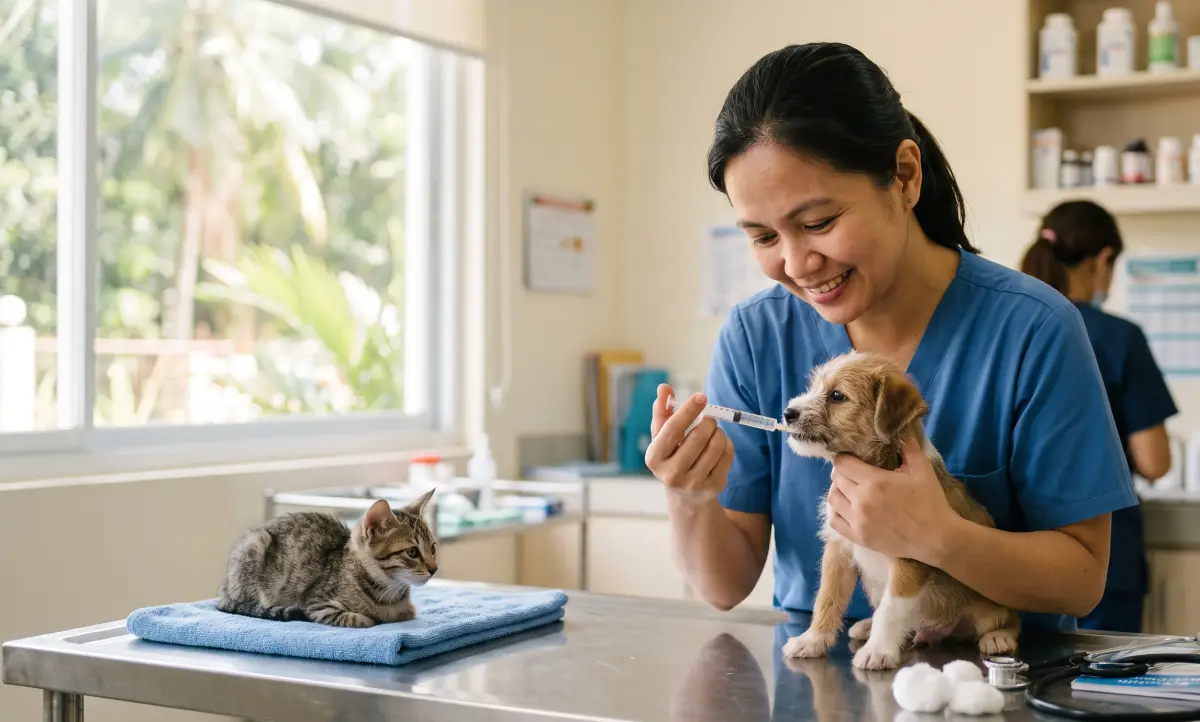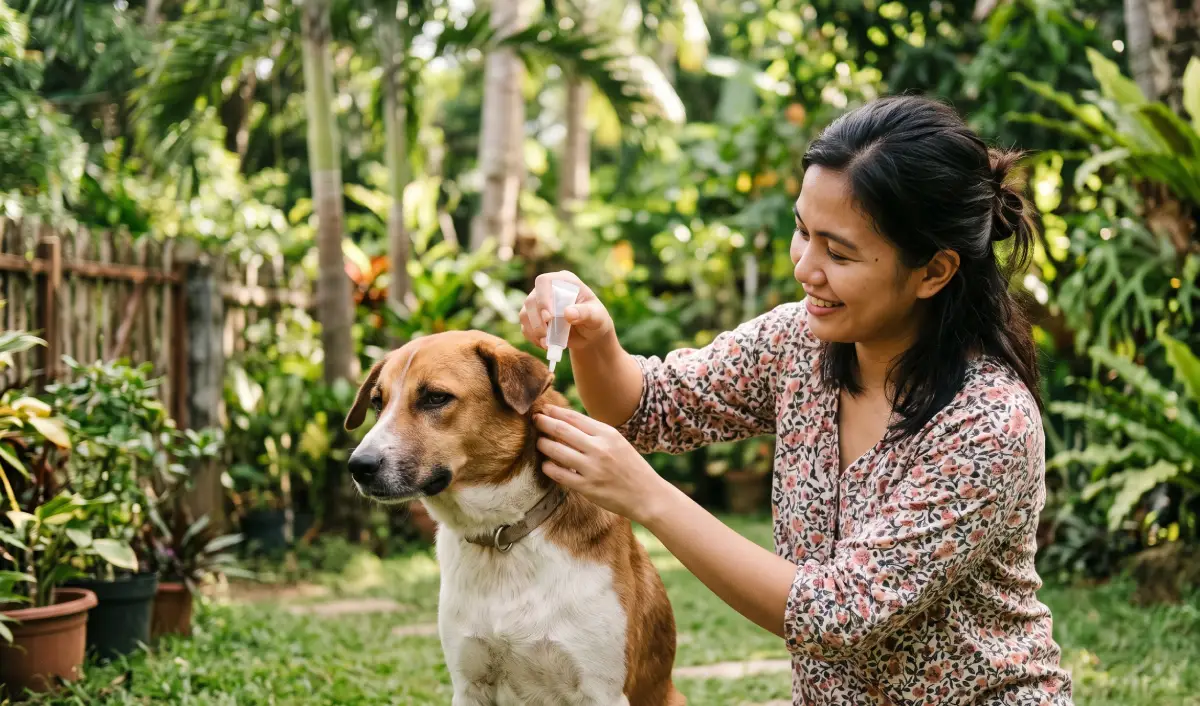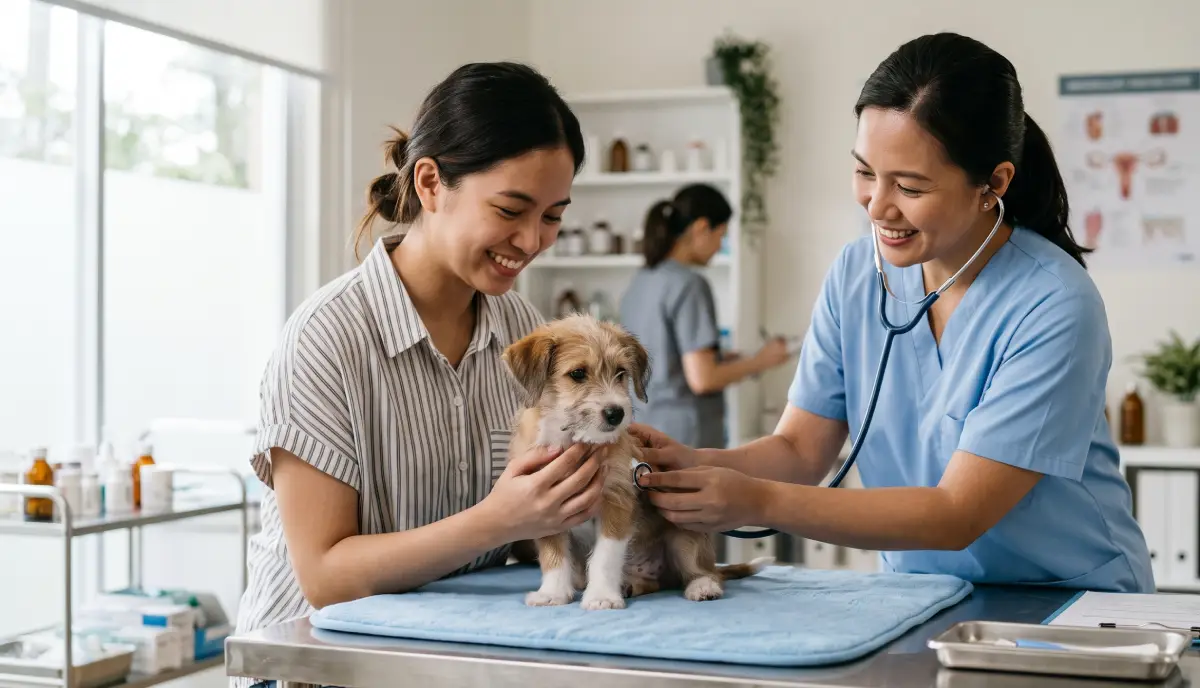
The day you bring home a new puppy or kitten is chaos in the best way — a tiny animal, a hundred questions, and a house that isn't quite ready. Somewhere in that first week, one thing matters more than the food bowl or the cute bed: the first vet visit.
That visit is the foundation for everything else. It catches problems while they're small, starts the health schedule on time, and gives you a plan instead of a pile of guesses. Here's exactly what to expect from a first vet visit in the Philippines in 2026 — what to bring, what the vet will do, what it costs — plus the full first-year health plan, with links to the details on each part.
Think of this as the hub. The individual guides — vaccinations, deworming, and tick and flea prevention — go deeper on each piece.
When to go
Within the first few days, ideally the first week — even if your new pet looks perfectly healthy. Puppies and kittens in the Philippines very commonly have worms, and early problems are easier and cheaper to fix than late ones. An early visit also gets the vaccination and deworming clock started on schedule, which matters because both are time-sensitive in the first few months of life.
The exception: if your pet shows any warning sign — not eating, vomiting, diarrhea, lethargy, or trouble breathing — go immediately. Don't wait for a scheduled visit.
What to bring
- Any paperwork from the breeder, shelter, or previous owner — especially vaccination or deworming records, if there are any.
- A fresh stool sample in a clean container, if you can manage it. It lets the vet check for worms directly, which is genuinely useful for a young animal.
- A written list of your questions. You will forget half of them otherwise. (Diet, toilet training, when to spay/neuter, and tick prevention are the usual big four.)
- A safe carrier — a closed carrier for a kitten, a carrier or a secure leash for a puppy. A vet waiting room full of other animals is not the place for a loose, frightened baby pet.
What the vet will actually do
A thorough first visit isn't just "get a shot and go." A good vet will:
- Do a full physical exam — eyes, ears, mouth and teeth, skin and coat, listening to the heart and lungs, and feeling the belly.
- Weigh your pet — the baseline for correct medicine and dewormer dosing, and something worth tracking as they grow.
- Check for parasites — external (fleas, ticks, ear mites) and internal (worms, via that stool sample).
- Build the health plan with you: the vaccination schedule, the deworming schedule, tick and flea prevention, diet advice, and a conversation about microchipping and future spaying or neutering.
Ask them to write the plan down — or better, log it somewhere you'll actually keep.
What it costs
Here's the honest 2026 picture, so nothing surprises you:
- The consultation: typically ₱300 to ₱800 depending on the city — roughly ₱300 to ₱500 in Cebu, ₱300 to ₱600 in Quezon City, with premium Metro Manila clinics (Makati, BGC, Ortigas) at the higher end. A Pet Express consult is around ₱500.
- Add-ons, charged separately: the first vaccine (an 8-in-1 dog vaccine is about ₱750 at Pet Express), a dewormer (cheap — tens to a couple hundred pesos), and tick/flea prevention if you start it that day.
- Budget for repeat visits. Puppies and kittens need a series of 3 to 4 vaccine visits in the first few months, not one — so plan for several trips in year one, not a single bill.
A realistic way to think about it: the first year is the most vet-intensive year of your pet's life, front-loaded into the first six months. After that, a healthy adult mostly needs an annual check-up and boosters.
Turn the first visit into a system
Here's the mistake that undoes a great first visit: the vet lays out a perfect plan, writes it on a little card or a piece of paper — and three months later that paper is lost, faded, or buried, and nobody remembers when the next shot or deworming is due.
This is the exact problem we built Pawdex to solve. From that very first visit, you can log everything — weight, vaccines, deworming, tick and flea prevention, the vet's notes — into a free digital pet passport that lives on your phone and can't get water-damaged or lost in a move. Add a Pawdex QR tag and your pet also carries ID from day one, so if they ever slip out, whoever finds them can reach you. On the Pro plan, you get reminders before each due date, so the schedule your vet set up actually gets followed.
A first vet visit gives you a plan. A record keeps that plan alive.
Welcome to pet parenthood — start with the visit, keep the records, and you've set your puppy or kitten up for a healthy first year in the Philippines.
Sources:

Founder of Pawdex. Pet parent to Shimmer and Sigbin. Writes honest pet-care guides for Filipino pet parents — no fluff, real prices, real stories.