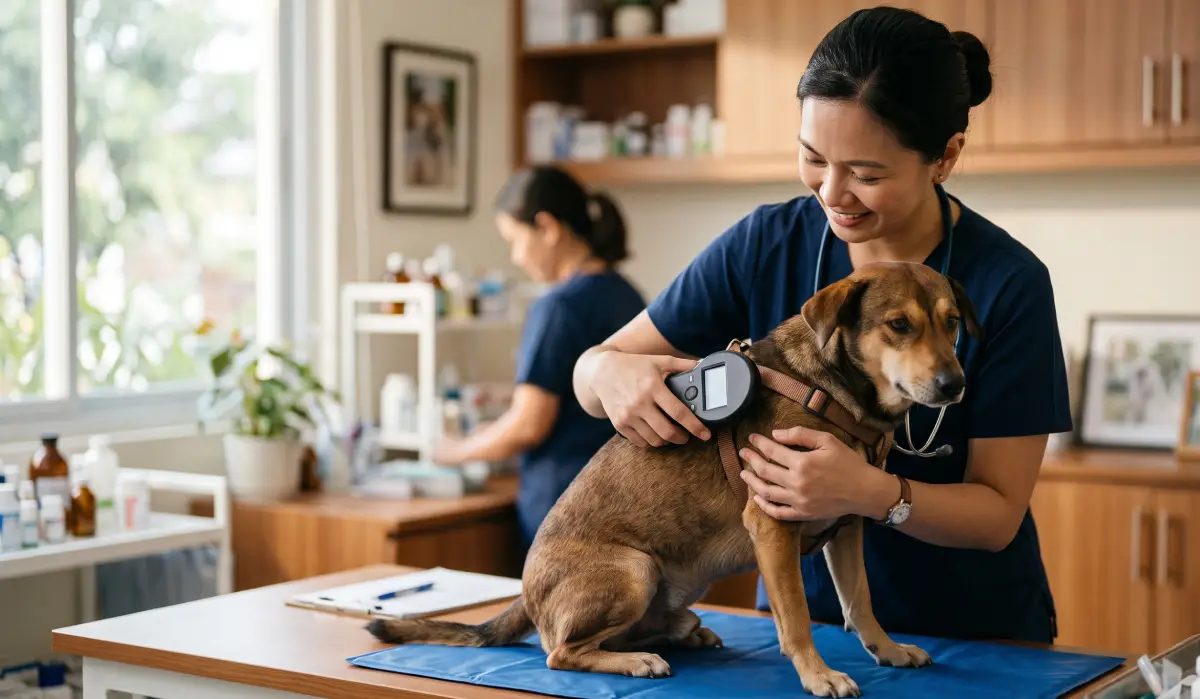
The vet slid the applicator between my dog's shoulder blades, there was a small click, and it was done. A microchip the size of a grain of rice, in about the time it takes to give a normal shot.
Microchipping is one of those things every responsible pet parent in the Philippines eventually asks about — usually right after a scare, a neighbor's dog going missing, or a new LGU registration notice. And the two questions are always the same: how much does it cost, and where do I actually go?
Here's the honest 2026 breakdown for the Philippines — prices, places, and the part most articles skip: what a microchip genuinely does, and what it doesn't.
What a microchip actually is
A pet microchip is a tiny passive transponder a vet injects just under the skin, usually between the shoulder blades. It has no battery and no signal. When a compatible scanner is passed over it, it displays a unique ID number — and if you've registered that number with your contact details, whoever scanned it can trace the pet back to you.
That's the whole job: permanent, tamper-proof proof of identity. It's not a tracker, it can't be removed by a stranger, and it lasts the pet's lifetime.
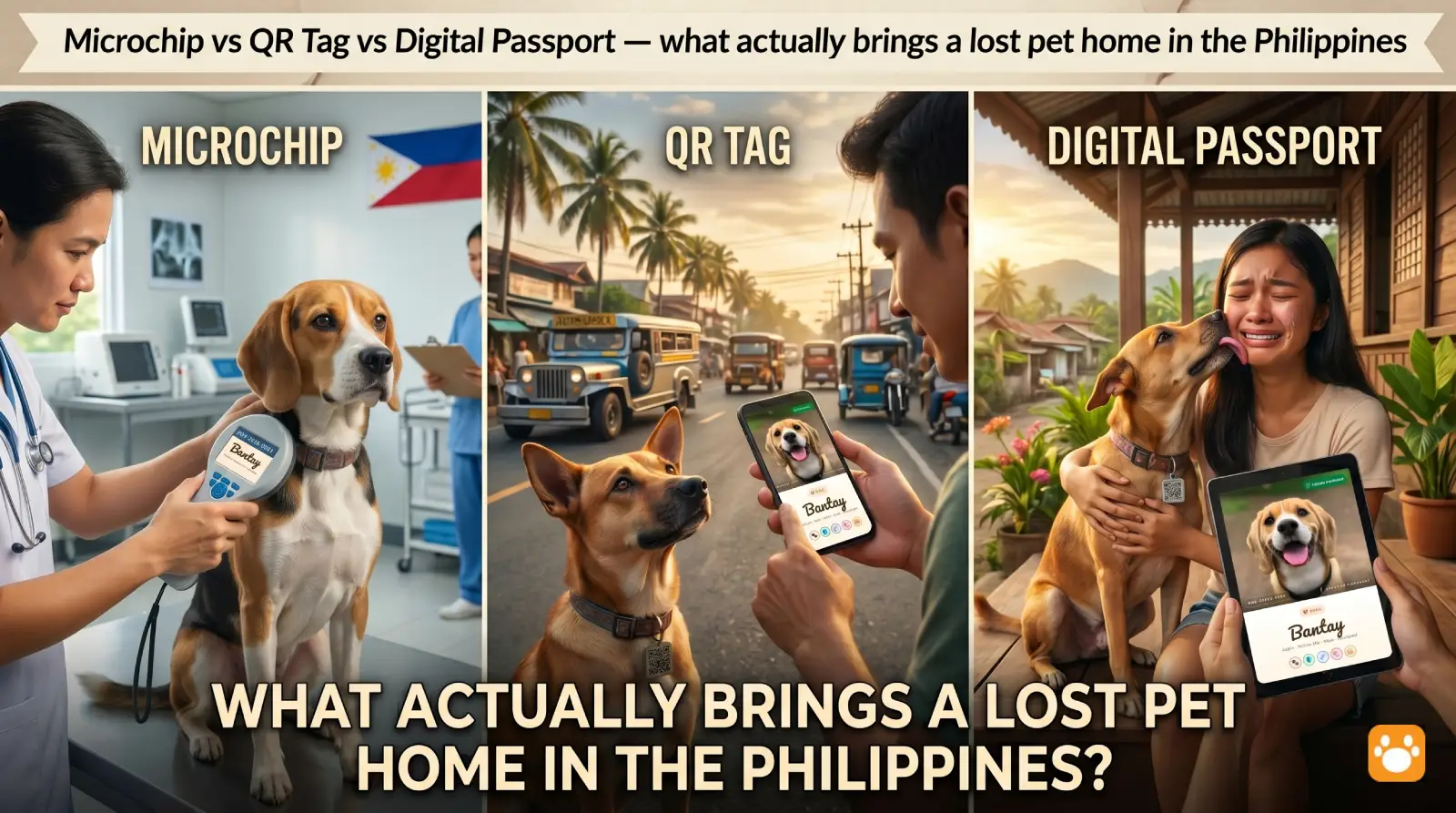
We covered the bigger picture of how chips, tags, and digital records fit together in our guide to microchips vs QR tags vs digital passports. This article zooms in on the cost and logistics of the chip itself.
What it costs in the Philippines (2026)
Prices fall into two very different buckets:
Private options: from about ₱150 to ₱1,500. Most private vets in Cebu and Metro Manila charge ₱750 to ₱1,500 for the implant, usually including a consult — a typical visit lands around ₱1,000. But it can be much cheaper if you shop around: Pet Express branches have offered the implant for as little as around ₱150, and Cebu City's veterinary office (DVMF) has offered it around ₱600 as a registration add-on.
LGU programs: free to a token fee. This is the part many pet parents don't know about. A number of local government units — in Metro Manila and beyond — run free or very low-cost microchipping, often tied to pet registration. The standout example: in Mandaue City, a ₱100 pet registration fee includes free lifetime anti-rabies vaccination and microchipping at the City Veterinarian's Office. That's not a typo — ₱100, once, for the chip and lifetime rabies shots. Several other LGUs have run free microchipping drives too, but they come and go — check your city vet office's Facebook page for the next scheduled session.
So before you pay private rates, it's genuinely worth a call to your city veterinary office to ask what they offer. For a wider price comparison across pet ID options, our microchip vs QR tag vs digital passport guide breaks down the full picture.
Where to get it done
You have three realistic options:
- Your regular vet clinic — the most convenient, and the record stays with a vet who already knows your pet.
- Your City Veterinarian's Office / LGU — the cheapest, especially where registration drives are running. Watch your LGU's Facebook page for announcements.
- Pet relocation and import specialists — if you're microchipping specifically for overseas or inter-island travel, these providers make sure the chip meets the destination's requirements.
Wherever you go, ask one question before they implant: "Is this an ISO-compliant chip?"
Why ISO-compliant matters
Not all microchips use the same radio frequency. The international standard is ISO 11784/11785, and it's the frequency the scanners at most clinics, shelters, and animal welfare organizations are set to read.
If your pet ends up with a non-standard chip, there's a real risk that the shelter or good samaritan who finds them can't read it — which defeats the entire purpose of paying for one. A reputable clinic will use ISO chips by default, but it costs you nothing to confirm.
Registration is the step everyone skips
Here's the mistake that quietly wastes the whole ₱750 to ₱1,500: a microchip does nothing until the number is registered to your current contact details.
The chip itself is just a number. If it was never registered, or it's linked to an old phone number, or to the breeder you bought the puppy from three years ago, then a scan turns up an ID that leads nowhere. Every year, shelters scan found pets, get a valid chip number, and still can't reach anyone.
So the day you microchip:
- Register the number with the provider's database, in your name, with a phone number you actually use.
- Keep the registration details somewhere you won't lose them.
- Update it the moment you change numbers or move.
This is exactly the gap a digital pet passport is built to close — you store the chip number, the registry, and your contact details in one place on your phone, alongside your pet's vaccination and health history, so nothing is stranded on a paper certificate in a drawer. Your first pet's passport is free.
The honest limitation: speed
A microchip is the right foundation — permanent and unfakeable. But it has one real weakness: it needs a scanner. When a pet goes missing, the finder is almost never carrying an ISO microchip reader. They're a tricycle driver, a sari-sari store owner, a kid down the street. Getting the chip read means someone has to take the pet to a clinic or shelter first — hours or days later, if at all.
That's the gap a visible, scannable tag fills. Anyone who finds your pet can scan a QR pet tag with the phone already in their hand and reach you in minutes — no clinic trip, no special equipment. It's why the strongest setup isn't microchip or tag, it's both: the chip for permanence, the tag and digital record for speed. If your pet does go missing, our step-by-step guides for a lost dog and a lost cat walk through the first critical hours.
Microchip your pet. Register it properly. Then add a way for an ordinary person to reach you fast — because the goal was never to have a chip. The goal was to get your pet home.
Sources:
- Microchipping Your Pets: Where Can You Get It For Free in the Philippines? — Spot.ph
- What is microchipping and where can your pets get one? — GMA News Online
- Pet Microchipping in the Philippines: What Pet Owners Should Know — Pet Express
- Understanding mandatory pet registration in the Philippines — PEP.ph
Founder of Pawdex. Pet parent to Shimmer and Sigbin. Writes honest pet-care guides for Filipino pet parents — no fluff, real prices, real stories.