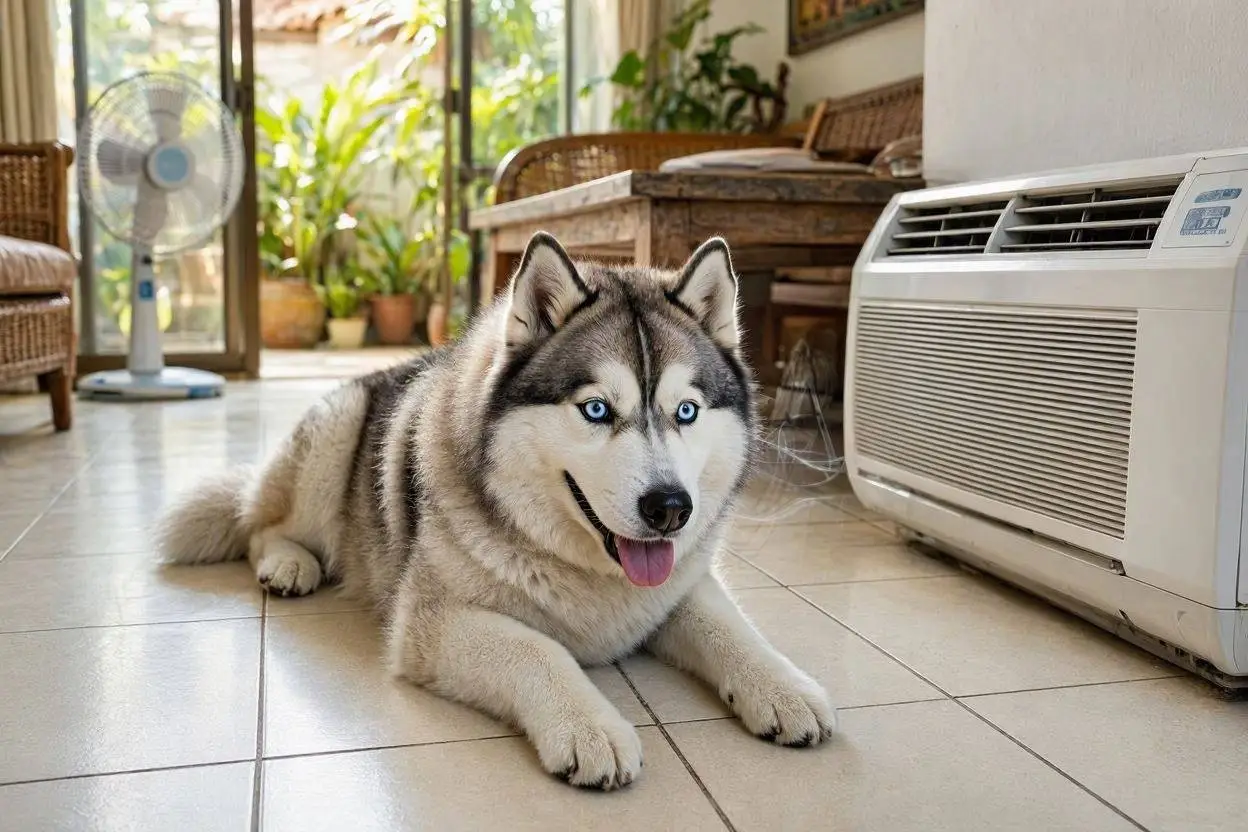
A friend of ours moved from Cebu to Manila last year for work and called us a week before her flight in a quiet panic. She had assumed her dog Tisoy — a 22-kilo aspin mix — would be in the seat next to her in a carrier, the way her sister flies with a Bichon in the US. She found out, three days before departure, that domestic Philippine flights do not work that way for a dog Tisoy's size.
Tisoy made it to Manila safely. But the week before her flight involved an emergency vet visit for a health certificate, a frantic drive to the Bureau of Animal Industry office at Mactan, a hunt for a hard-shell crate that actually fit a 22-kilo dog, and a phone call to Cebu Pacific Cargo we wish she had made a month earlier.
This is the guide we wish she had read.
Below is the honest 2026 picture of flying with your pet between Philippine cities on Cebu Pacific and Philippine Airlines, including the permit nobody warns you about and the option most people overlook entirely.
The single biggest update, up front
As of February 16, 2026, Philippine Airlines now allows small dogs in the passenger cabin on all PAL domestic flights through their FurPAL program — a meaningful policy shift that changes the calculus for thousands of Filipino pet parents. Cebu Pacific, as of this writing, has not announced a similar in-cabin program; their pets still fly via CEB Cargo only.
So the 2026 picture looks like this:
- PAL domestic + small dog (≤10 kg, ≥8 weeks, fully weaned) → in-cabin via FurPAL for ₱2,500 one-way
- PAL domestic + larger pet → cargo hold via PAL Cargo
- Cebu Pacific domestic + any pet → cargo hold only via CEB Cargo
- Either airline international → different rules entirely (destination-country requirements dominate)
- Snub-nosed breeds (pugs, bulldogs, Persian cats, etc.) → restricted on both airlines, in cabin and cargo
If your dog is small enough for FurPAL and PAL flies your route, you suddenly have a much gentler option than you would have had even a year ago. If your pet is over 10 kg, a cat (cats aren't currently included in FurPAL), a brachycephalic breed, or you are flying Cebu Pacific, the cargo-hold conversation in the next sections is still very much yours to have.
We say all of this up front because the assumption that "of course small pets can come in the cabin" used to be the most common mistake first-time Filipino pet flyers made. That assumption is now correct on PAL — and still incorrect on Cebu Pacific. The choice of airline genuinely matters now in a way it didn't before.
Cebu Pacific (5J) — Cargo only on domestic
Cebu Pacific accepts pets only as cargo, processed through CEB Cargo. The pet does not travel as accompanied baggage or in the cabin — they travel as commercial cargo, often on the same flight as the owner.
What to expect:
- Booking is done through CEB Cargo directly, not at the passenger counter. You can coordinate by calling (02) 8802-7070 or emailing cargocare@cebupacificair.com. Last-minute walk-ins almost always get turned away. A week of lead time is the minimum; two weeks is safer; four weeks if you are traveling during Christmas or Holy Week.
- Pets are only accepted on domestic Philippine flights — Cebu Pacific does not accept pets on any international flights due to aircraft restrictions. International pet travel out of the Philippines on Cebu Pacific is not currently an option.
- Snub-nosed (brachycephalic) breeds are NOT accepted. This includes pugs, bulldogs, Boston terriers, shih tzus, Persian cats, Himalayan cats, and similar breeds. The restriction is because of the elevated breathing risk for these breeds in cargo conditions. If you have a brachycephalic pet, ground transport or sea travel is the path.
- The pet flies on a commercial passenger aircraft cargo hold — pressurized and temperature-controlled. This is the same kind of cargo hold international airlines use for pet transport globally; the environment itself is survivable. What you are managing is stress, hydration, and ground-level heat exposure.
- Required documents: a current BAI shipping permit, a current anti-rabies certificate, and a vet-issued health certificate. We will walk through the BAI part in detail below.
- Crate requirements: FAA-approved / IATA Live Animals Regulations compliant — these standards are essentially aligned for the physical crate you actually buy. Metal cages are not accepted. We have a full crate section below.
- Live cargo rates: Cebu Pacific publishes their current rates through CEB Cargo. We are not quoting a specific peso amount in this article because rates shift by route, weight, and season, and a number we publish today will be stale by next year. Email or call CEB Cargo at booking time for the current rate card.
Philippine Airlines (PR) — FurPAL in-cabin OR PAL Cargo
PAL has two paths for domestic pet travel in 2026, and the choice between them is determined almost entirely by your pet's size.
FurPAL — in-cabin for small dogs
PAL launched the FurPAL program in February 2026, extending it to all domestic routes as of February 16. This was a real policy shift, not a marketing rebrand of an existing program. The terms:
- Eligible pets: small dogs only, up to 10 kg, at least 8 weeks old, and fully weaned. Cats are not currently included in the FurPAL program; cats still travel cargo.
- Snub-nosed breeds are NOT eligible — pugs, bulldogs, Boston terriers, French bulldogs, and similar brachycephalic breeds remain excluded even in the small-dog category.
- Fee: flat ₱2,500 one-way regardless of route.
- Capacity: one pet per passenger, maximum three small dogs per flight.
- Carrier requirements: soft-sided, leak-proof, maximum dimensions 17" × 11" × 9.5", with pee pads and ventilation panels. This is a different carrier spec than the hard-shell IATA crate required for cargo — do not bring the cargo crate into the cabin.
- No sedation. PAL is explicit that sedated pets will not be accepted.
- Required documents: valid health certificate, updated vaccination records, vet certificate, the signed PAL waiver and declaration form, and a BAI shipping permit.
- Booking: must be added on through PAL's "Travel Boost" page before completing payment — the FurPAL slot is selected at booking time, not at the counter.
If your dog qualifies and your route is PAL-served, FurPAL is genuinely the gentler option. You travel together; the pet is at your feet, not in a separate hold; the stress profile is fundamentally different from a cargo flight.
PAL Cargo — for larger pets, cats, and ineligible breeds
For everything FurPAL does not cover — dogs over 10 kg, cats, brachycephalic breeds, large carriers — PAL Cargo handles the cargo-hold version. The structure parallels Cebu Pacific's CEB Cargo:
- Booking is done through PAL Cargo, with at least 48 hours notice before your scheduled flight.
- Hard-shell crate required — FAA-approved / IATA Live Animals Regulations compliant.
- Snub-nosed breeds restricted in cargo as well, both domestic and international.
- Document checklist: BAI shipping permit, anti-rabies certificate, vet-issued health certificate.
- Live rates: call PAL Cargo at booking time. PAL publishes current details at the official Philippine Airlines pet travel page.
Service dogs
Service dogs — properly trained and documented — fly in the cabin at no charge on PAL, one per passenger on non-US flights. They are accommodated separately from the FurPAL program. Emotional support animals are not categorized as service dogs and do not receive the cabin exception.
The BAI shipping permit — the part most travelers miss
The Bureau of Animal Industry, under the Department of Agriculture, is the government office that regulates animal movement across Philippine regions. Every inter-island pet transit — air or sea, in-cabin or cargo — legally requires a BAI Shipping Permit (SP). There is no airline-specific exemption. FurPAL does not skip this step; cargo does not skip this step; sea travel does not skip this step.
How it works in practice:
- Apply online first. The BAI National Veterinary Quarantine Services Division (NVQSD) accepts shipping permit applications at nvqsd.bai.gov.ph. Start the application there before heading to the airport.
- What you need to upload: a recent vet-issued Veterinary Health Certificate (VHC), which is only valid for 5 days — so do not get it more than five days before travel. The standard fee for the VHC itself is around ₱400 per pet, exclusive of any vaccination costs.
- Anti-rabies vaccination must be within the past year (RA 9482-compliant). If yours is overdue, see our Dog Vaccination Schedule Philippines 2026 for how to catch up before applying for the permit.
- In-person verification at the BAI Veterinary Quarantine Service desk — these are located at NAIA, Mactan-Cebu, Davao International, and several other regional ports. Most travelers complete the in-person step on the day before or the morning of the flight.
- Permit fees: modest, typically in the low-hundreds-of-pesos range. Pay at the Veterinary Quarantine Unit at the airport. Confirm the current published fee on the NVQSD site before assuming a specific amount.
The most common mistake: showing up at the cargo terminal — or the FurPAL counter — with your pet but no BAI shipping permit. Airline staff are legally required to refuse acceptance without it. Pet does not fly; flight is missed; rebooking happens. Get the permit, with a VHC dated within the last 5 days, before you head to the airport.
The IATA crate — the part that fails most travelers
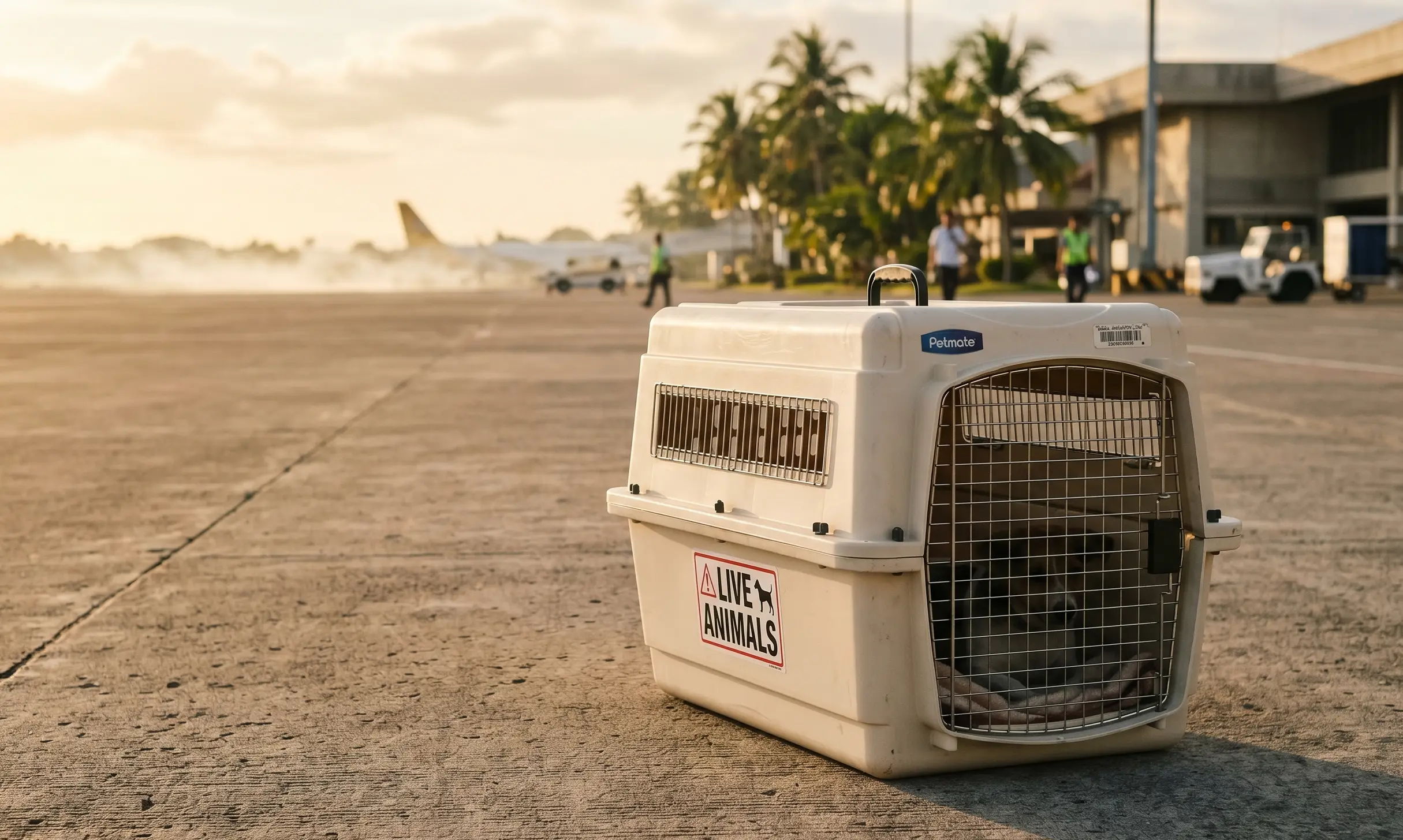
Both airlines require the pet to travel in an IATA Live Animals Regulations compliant crate. This is an international standard with very specific requirements; a generic plastic pet carrier from the mall almost always fails on at least one of these points:
- Hard-shell construction with a solid floor. Soft-sided carriers are not accepted in cargo, ever.
- Ventilation on at least three sides — most IATA crates have ventilation slots all around, but the minimum is three sides plus ventilation visible from the door.
- A door with a locking mechanism. Many travelers add zip ties as a backup; this is fine and often recommended.
- "Live Animals" stickers prominently visible on multiple sides. Most IATA-compliant crates come with these stickers; if yours did not, print them and attach.
- Food and water dishes attached to the inside of the door — empty for takeoff but in place. Cargo handlers will fill them if there is a delay.
- Sized correctly for the pet. Large enough that the pet can stand up fully, turn around, and lie down in a natural position. Not so large that they slide around during turbulence. Most pet specialty stores can help you size correctly; bring your pet to the store if possible.
- Owner contact information taped to the top of the crate — name, phone number, destination address, "If found, please call." This is also a great moment to confirm your pet's QR collar tag and microchip details are current, since the crate label and the collar are the two redundant identification layers your pet has during transit. We use a Pawdex QR Tag for exactly this scenario.
Where to buy IATA-compliant crates in PH:
- Pet Express carries them in stock at most mall locations
- Lazada and Shopee have multiple sellers — verify "IATA-compliant" explicitly in the product description
- Specialty importers (some Manila and Cebu vet clinics double as suppliers) — useful for unusual sizes
Order at least 3 to 4 weeks before flight. Let your pet sleep in the crate at home for a few weeks before travel. A pet that already associates the crate with rest is dramatically less stressed on flight day.
The day-of-flight checklist
A clean, repeatable routine helps both you and the pet:
- No food 4 to 6 hours before flight. An empty stomach reduces nausea and accident risk. Water is fine until departure.
- A long walk or play session that morning. Burn off energy; encourage one last bathroom break.
- A worn shirt of yours inside the crate. Familiar scent reduces stress.
- Water dish filled with ice cubes, not liquid water, before drop-off. The ice melts gradually and prevents spillage during loading. Most experienced cargo agents will tell you this; some travelers learn it the hard way.
- Pet's regular collar with current QR tag still on. The crate label is one layer; the collar is the redundant layer. If the crate gets separated or relabeled, the QR tag is what keeps your pet identifiable. We built the Pawdex QR Tag specifically because we did not trust crate labels alone.
- Photos of your pet inside the crate, taken at the cargo counter. This is your record of how the pet looked at drop-off.
- The cargo terminal — not the passenger baggage claim — is where you pick up your pet at the destination. It is a separate building, sometimes a 10 to 15 minute walk or shuttle ride from the passenger terminal. Plan for this. Pickup usually happens 30 to 60 minutes after the flight lands.
A note we cannot stress enough: do not sedate your pet for flight without explicit vet approval. Sedatives interact poorly with altitude and air pressure changes, and several major airlines globally (including IATA's published guidance) recommend against routine sedation for animal transport. Discuss anxiety management with your vet at the pre-flight check; there are non-sedative options.
Sea travel — the underrated option
Both 2Go Travel and Cokaliong Shipping Lines accept pets on most Philippine inter-island routes. For shorter trips, smaller budgets, or pets that handle stress poorly, sea travel is often the gentler choice.
What to expect:
- Pets travel in a designated pet area on the ship — typically a kennel or pet section, not your cabin. Conditions vary by vessel; ask the line directly when booking what the pet area looks like on your specific route.
- 2Go accepts pets on most vessels coming from and going to Manila, with one important exception: the M/V 2GO Masigla does not currently accept pets. The flagship Manila↔Cebu service typically uses M/V 2GO Masagana, which does. Always confirm the specific vessel at booking.
- Cokaliong allows pets (and guide dogs accompany visually impaired travelers free of charge), but pets must be kept in a cage for the duration of the journey, and fees are determined at the terminal based on destination.
- The same BAI shipping permit applies — sea transit is not exempt.
- Cost is generally lower than cargo air for the same route, sometimes substantially so.
- Travel time is the trade-off — Manila to Cebu by 2Go is roughly 22 to 23 hours on direct vessels (longer if the sailing routes through Batangas, Butuan, or Ozamis), versus 90 minutes by air.
- Booking contacts: 2Go freight hotline (02) 8528-7400, email 2go_freight@2GO.com.ph, or visit any 2GO Freight Office. Cokaliong information is at cokaliongshipping.com.
Sea beats air when:
- The route is short enough that the sea time is reasonable (Cebu↔Bohol, Cebu↔Negros, Manila↔Mindoro are all easy)
- Your pet has severe separation anxiety or noise sensitivity (cargo hold is loud; ferry kennels are calmer)
- Your pet is a brachycephalic breed restricted from air cargo on both airlines
- Budget is tighter
- You and your pet can be on the same vessel (vs cargo air, where the pet is in a separate part of the plane)
Air beats sea when:
- Long routes (Manila↔Davao would be days by sea, hours by air)
- Time-critical relocations (job, vet appointment, family emergency)
- Your small dog qualifies for FurPAL — in-cabin air with you for 90 minutes is genuinely gentler than 22 hours in a ferry pet kennel for most dogs
Neither option is universally better. The right call depends on your pet, your timeline, your route, and your budget.
What Pawdex does for traveling pet parents
We are pet parents who have flown a dog cargo through NAIA more than once. A few things that consistently saved us time and stress:
- A digital passport that holds the anti-rabies certificate, the health certificate, and a clean shareable version of the pet's photo. Showing the BAI officer a digital record on your phone is faster than digging through a folder for paper.
- For Pro+ pet parents, the Vet-Ready PDF export generates a single downloadable document that includes vaccination history, recent vet visits, weight chart, and any medications. We have handed that PDF to airline cargo agents who asked for "more medical history" and watched the conversation end immediately. Saves a return trip to the vet.
- A Pawdex QR collar tag on the pet during transit. Crates get separated from owners at multiple handoffs — drop-off, loading, in-flight, unloading, pickup. Every one of those handoffs is a moment where a piece of paper could get lost and a collar tag stays attached to the pet.
- Lost Mode for the airport scenario you hope never happens — a pet that escapes a crate during transit. We have written about what to do if your dog gets out; flipping on Lost Mode while you are still calling the airline cargo desk turns the entire Pawdex community into a search party. The find-lost-pets directory makes them publicly searchable in minutes.
A practical 4-to-6-week timeline
If your flight is six weeks out, this is the pacing that has worked for every PH pet-parent move we have helped with:
- Week 6 — Vet visit. Confirm anti-rabies is current. Get a weight check for crate sizing. Discuss any travel anxiety with the vet.
- Week 5 — Order the IATA crate. Let your pet sleep in it at home, doors open, treats inside.
- Week 4 — Book the cargo slot with Cebu Pacific Cargo or PAL Cargo. (Holiday season — push this to week 6 if traveling Dec or Holy Week.)
- Week 2 — Order a fresh QR collar tag if yours is worn or info is outdated. Confirm cargo booking details by phone.
- Week 1 — Vet visit for the health certificate. Apply for the BAI permit at the airport BAI office (or the day before flight).
- Day before — Final crate test, treats inside. Charge phone. Print all documents in duplicate as backup.
- Flight day — No food 4-6 hours before. Walk before drop-off. Photos at the cargo counter. Hand off, breathe, arrive ahead of pet pickup time at the destination cargo terminal.
The pets who travel best are the ones whose owners did this on a calm schedule rather than in a three-day panic. Give yourself the runway.
If you are about to relocate, or you are planning a trip with your pet, or you just want to know what would actually be involved when the time comes — you now know more than 90% of Filipino pet parents about the process. Save this article. Bookmark the airline and BAI official sites for current rates. And start your pet's digital passport if you have not yet, because the next time someone asks for a vet record or an anti-rabies certificate, you want it in your pocket — not in a folder at home in another city.
Safe travels. Bring the treats. Take the photos. Your pet is about to do something brave.
Founder of Pawdex. Pet parent to Shimmer and Sigbin. Writes honest pet-care guides for Filipino pet parents — no fluff, real prices, real stories.