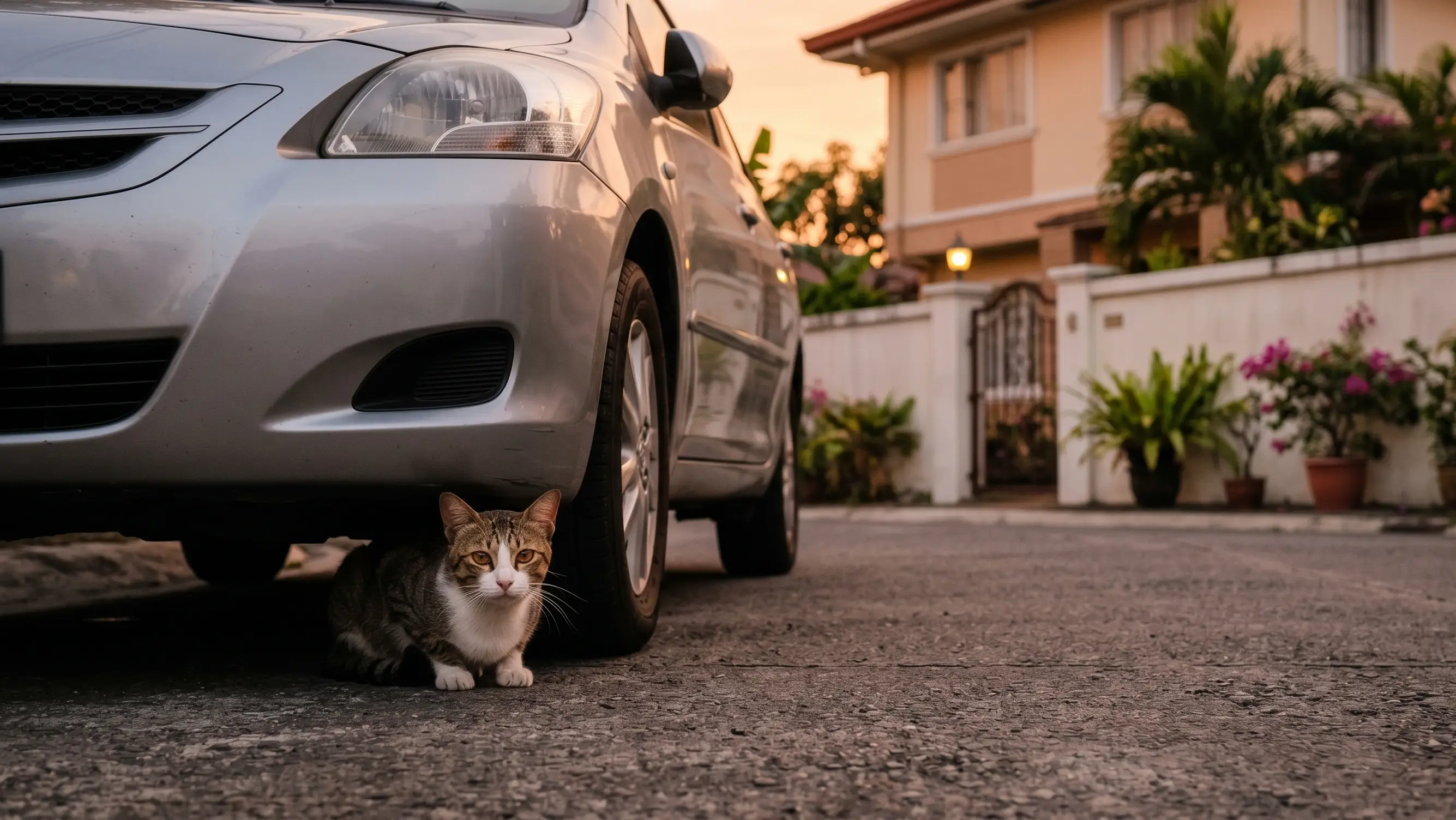
The gate had been open maybe forty seconds.
Shimmer is small, sneaky, and faster than she looks. A delivery rider had buzzed the buzzer, my mom stepped out to receive a package, and that was the window. By the time anyone noticed, Shimmer was already past the corner and turning into traffic.
We got her back that afternoon. She came home wet, exhausted, and totally unbothered. But what I remember most isn't the relief — it's how badly I wanted to do something in the first twenty minutes, and how everything I instinctively wanted to do was wrong.
If you grew up in a Philippine compound, or in a subdivision with the kind of gate that has to open multiple times a day, you don't need me to explain why this story is so common. The fear is earned.
So let's get practical. This is the playbook we wish someone had handed us — what to do hour by hour when your dog gets out, in the Philippines, in 2026. No panic, no fluff. The steps that actually work, the people who can actually help, and the things that quietly waste your time.
The first 30 minutes — don't do these, do these
Your instinct is going to be to run, call loudly, and drive in circles. All three feel productive. All three actively reduce your chances of finding your dog fast.
Here's the honest truth about how dogs behave when they're suddenly outside without you:
- They read your panic as danger. The louder and more frantic you sound, the further they'll keep moving.
- They get disoriented quickly. The street smells different than usual, the cars are louder, and they don't know whether to come to you or run from the noise.
- They almost always look back at your gate first. If you're not there when they double back, they keep moving.
So here's the calm version of the first thirty minutes:
Stay near where they were last seen. This is the single highest-leverage thing you can do. One adult posts up at the gate or the spot they slipped out from, calling softly, holding their favorite treats or food. Not yelling — talking, the way you do at home.
Leave the gate open. Put their bed, their bowl, even a piece of your worn t-shirt outside the gate. Dogs come back to where they recognize the smell of home before they recognize the address.
One family member stays home. If you and everyone in the house all run out at once, you're going to come back to a dog sitting at your closed gate, confused, and you'll have missed each other by ten minutes.
Everyone else fans out slowly, on foot. Cars are the worst search vehicle — you cover ground fast but you also miss your dog crouched behind a parked tricycle. Walk. Look between cars, under jeeps, behind sari-sari stores.
And then there's the PH-specific thing nobody warns you about: the road is right there. Most subdivisions and compounds in Cebu, Manila, Davao, and Iloilo are minutes from a busy street. So your foot search has to be traffic-aware. Send someone toward the nearest main road first, even if your gut says your dog wouldn't go that way.
Hours 1 to 3 — expand the radius, on foot
This is the window where most lost dogs are actually found, and most pet parents spend it in the wrong places.
A medium-sized dog can cover one to two kilometers in this stretch. They're not running in a straight line — they're following smells, other dogs barking, the sound of food. Your search radius should track those things, not the cardinal directions.
Walk their familiar routes first. Where do you take them for walks? Where have you stopped to chat with a neighbor while they sniffed something? Those are the places they'll wander toward when they're trying to orient.
Then walk where the food is. Eateries with sidewalk seating, sari-sari stores with leftover scraps, subdivisions with feeding stations for community cats. Your dog is following their nose more than their memory in hour two.
Bring familiar smells. A piece of clothing you've slept in, their unwashed bed, a worn collar. You're not just looking for them — you're leaving a scent trail they can follow back.
The other half of this hour is talking to people. The Philippines has an underrated, totally informal lost-pet network that costs you nothing to activate:
- Security guards. Every subdivision guard, every condo guard, every business guard sits outside their post all day watching things go by. They notice a stray. Walk up calmly, show a photo on your phone, leave your number. The good ones will text you within hours if they see anything.
- Sari-sari store owners. Same as guards but moreso — they sit outside, they know every street dog in the neighborhood by name, and they'll know within twenty minutes if a new dog turns up looking confused.
- The kasambahay network. This is the one most pet parents underestimate. Domestic helpers chat across compounds, send each other photos, and notice things their employers don't. Show the photo, leave your number, ask politely if they can share with their group chat. It works.
- Tricycle and jeepney drivers in your barangay. They cover ground all day. A driver who saw a small white dog crossing Aguinaldo at 2pm can save you four hours of guessing.
Bring a small printed photo with your phone number in your pocket. Just one or two copies for now — the proper flyer drop comes in the next hour.
What you do not want to do in hour two is sit on Facebook posting in groups. The online blast is hour four. Right now you have a much better chance of finding your dog on foot than online.
Hours 4 to 12 — the flyer blast
By now you've covered the close radius and your dog is either back home (often) or you're moving into a slower, more deliberate phase. Time to print, drop, and start the wider net.
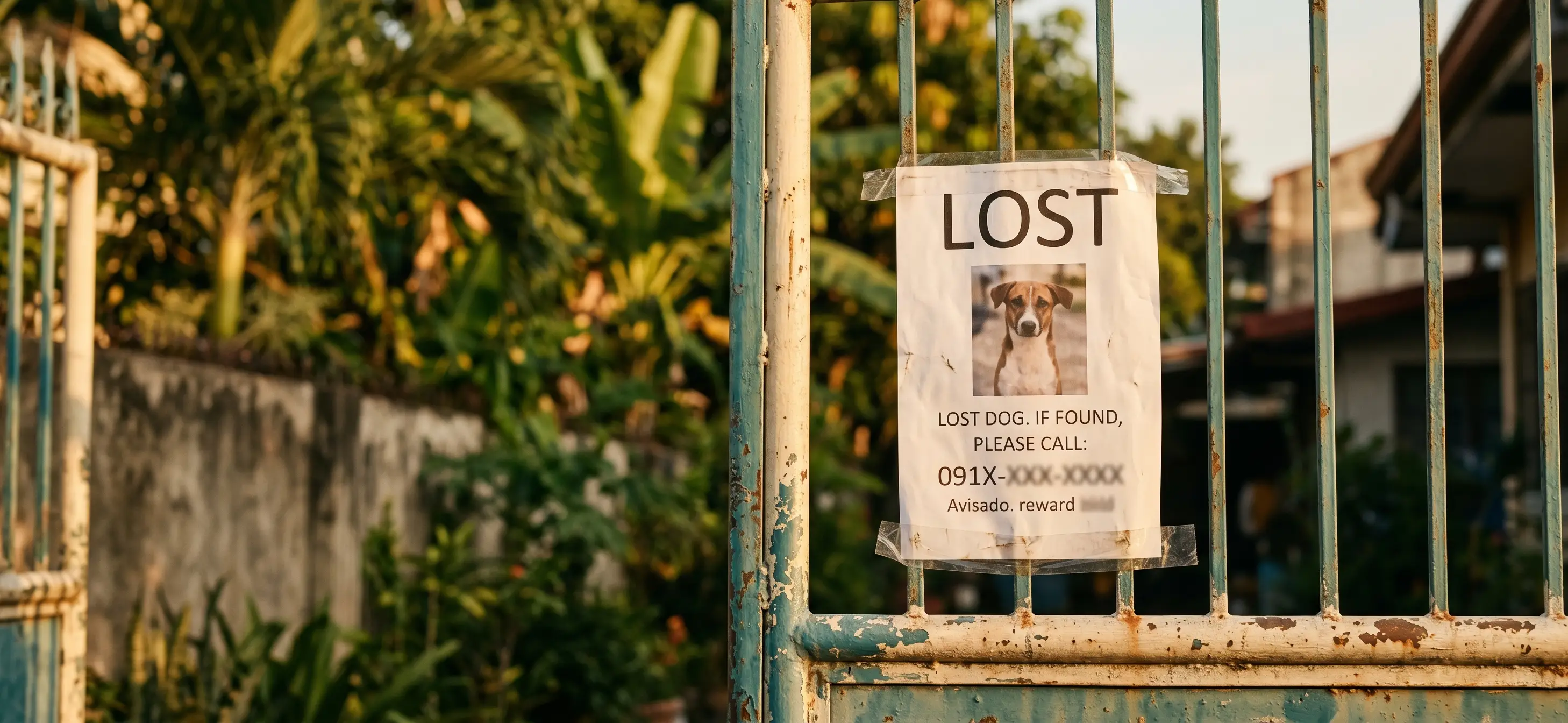
Make the flyer. If your dog has a Pawdex digital passport, the flyer is a one-tap export from the dashboard. If not, any quick design will do — what matters is what's on it.
The formula that actually works:
- A clear, front-facing photo. Not the cute one of them sleeping with the head turned. People need to be able to match the face they see on the street.
- Pet name. Big myth that hiding the name is safer. It's not. Knowing the name helps a kind stranger call out to your dog, see if they respond, and confirm it's the right one.
- Last seen. Time, barangay, and a landmark. ("Around 2pm near corner of [Street] and [Street].") Don't write your full home address — barangay and landmark are enough.
- Description. Size, color, any visible markings. If they were wearing a collar or harness, mention it.
- Microchip yes or no. Helps vets and shelters know whether to scan.
- Pawdex code if you have one. Anyone with a phone can pull up the digital passport from this.
- Your phone number. Use your own, or a family member's if you're worried about scam calls. Put it at the bottom — most readers stop at the photo and the headline, so make sure the number is on screen even if they don't read the body.
- Honest reward line. "Small reward for whoever helps us reunite" — don't put a specific number. Specific high amounts attract scammers; vague honesty attracts genuine helpers.
Then drop the flyer physically, not just digitally. Here's where:
- Your barangay hall. Some barangays maintain actual lost-pet boards. Worth asking the desk staff.
- Every sari-sari store within two kilometers. Ask politely if they can tape it inside the window.
- Vet clinics in the radius. Most vets will accept stray dogs brought in by strangers; if you've left a flyer, they'll call you.
- Subdivision and condo guard houses. The guard will share with the next shift.
- Dog parks if there's one nearby — Ayala, BGC, Cebu IT Park, certain QC subdivisions have small ones.
This is also the right time to talk to your barangay tanod or the barangay captain's office. Some barangays in the bigger PH cities do actually have lost-pet networks that get activated when you ask. Most don't, but the ones that do are gold.
Within 24 hours — the online blast
By hour twelve to twenty-four, your physical net is set. Now you go online.
Facebook is still the highest-leverage channel for lost pets in the Philippines. The major groups to post in:
- Lost and Found Pets Philippines (and its various regional spin-offs)
- Lost and Found Pets [City] — there are versions for Manila, Cebu, Davao, Iloilo, CDO, Bacolod, Baguio, and most major metros
- Your local subdivision or condo Facebook group
- Your barangay group if it exists
- Pet-breed-specific groups (Aspin Adoption Philippines, Cebu Shih Tzu Owners, etc. — surprisingly active and willing to help)
A second tier worth posting in: r/Philippines and your city's subreddit. Smaller volume than Facebook in PH, but the people there share aggressively when something hits the front page.
The post formula:
- Photo first. Not a wall of text. People scroll past wall-of-text posts on Facebook. The photo is what stops the thumb.
- Headline: "LOST DOG — [Name] — [Date and time] — [Barangay]" — that's it. Don't bury the lead.
- One short paragraph of facts. Where they were last seen, what they were wearing, microchip status, anything visually distinctive. No emotional pleas — those get scrolled past faster than the facts.
- Phone number at the bottom. Make it text, not just inside a screenshot — people copy-paste from text more reliably.
- Hashtags. #LostDogPhilippines, #LostDog[City], #LostPetPH. They actually work for sorting later.
If you have Pawdex, activate Lost Mode while you're at it. The public passport flips to a red LOST banner with your contact info, every QR scan emails you with the city the scan happened in, and your dog appears on the public lost pets directory so the community can help. It's a quiet but effective layer that works without any social media.
The reposting cadence — most people do this wrong
Reposting in the same Facebook group five times a day doesn't help. It gets you muted or removed by mods, and the algorithm punishes you. Here's the rhythm that actually works:
- Day 1: Post once per group, then go answer every comment. Replying boosts your post in the feed more than reposting does.
- Days 2 to 3: Make a new post per group (not a bump of the old one). A fresh post performs better than a "bumped" comment.
- Days 4 to 7: Weekly refresh. Also post a short "thank you to everyone sharing" — it keeps you in the group's recent memory without being annoying.
- Days 8 to 30: Weekly refresh, plus any new sighting info you collect.
Stop reposting after thirty days. Beyond that, the return on online effort drops fast, and you're better off keeping your phone number current on your dog's digital passport so anyone who eventually finds them can still reach you.
Days 2 to 7 — the patience phase
This is the part nobody talks about and everyone underestimates.
Most found dogs come home within five to seven days. Some come home at week two or three. We've heard stories of reunions a month out, even longer. Don't take the flyers down at day seven.
Where to keep checking during this phase:
- Shelters and rescues in your area. PAWS Philippines is the largest in Metro Manila; CARA Welfare Philippines is the other major one. Cebu has PAWS Cebu and several smaller barangay-level rescues. Davao, Iloilo, and Baguio all have local rescues, usually findable on Facebook.
- Vet clinics within five kilometers. Many strays get brought to the nearest clinic. Call them, don't just walk in — ask if they've received any dogs matching your description.
- City animal pound or dog-catching unit if your city has one. Quezon City, Manila, and Cebu City all run these. Call before going.
- The local barangay hall, just to ask if anyone's reported finding a dog.
In the meantime, keep the flyers up. Refresh the ones that have gotten weathered. Reach out to anyone who shared your post and thank them publicly — it keeps your dog in the back of their mind.
What NOT to do — scam warnings worth memorizing
The Philippines, sadly, has a known pattern of lost-pet scammers. Here's what to watch for:
- "I found your dog, send GCash for vet bills before I tell you where they are." This is the classic scam. Real finders almost never ask for money upfront. They want the dog back to its family, not in their care. If anyone asks for cash, GCash, or Maya before sharing a location or a current photo, treat it as a scam.
- Asking for a "transport fee." Same pattern, different name. A real finder might ask you to come pick the dog up — they won't ask you to send money so they can deliver it.
- Demanding a large reward upfront. A genuine helper accepts what you offer when you reunite. A scammer wants the money first.
- "Send me your address so I can drop your dog off." Don't share your full address publicly or even privately to someone you haven't verified. Meet at a public landmark — a barangay hall, a vet clinic, a 7-Eleven.
How to verify a real finder:
- Ask them to send a current photo with today's date written on a piece of paper next to the dog.
- Ask them a question only the real finder would know — a marking, a behavior, the collar color.
- Arrange to meet at a vet clinic. They can verify the chip, and you can verify your dog.
The other thing not to do: drive yourself frantic. Take breaks. Eat. Sleep some. A panicked search is a worse search.
Prevention — the boring layer that actually works
This part is for the next time the gate opens. The honest truth is that the best lost-pet outcome is the one you set up before your dog gets out.
The three layers that work together:
- A QR collar tag. The cheapest insurance you can buy. Anyone with a phone camera can scan it and reach you, no specialized hardware needed. The Pawdex tag updates itself when you change your number, so it never goes stale — more on how that works here.
- A microchip. The medical-grade backup. Works when your dog ends up at a vet or shelter that scans. Not as universally useful in PH as people assume — we wrote an honest breakdown of microchipping vs QR tag vs digital passport if you want the full comparison.
- A digital passport. Ties it all together. One scannable URL with your dog's photo, name, current vaccination status, your phone number, and emergency contacts. Lost Mode adds the LOST banner and scan-location alerts on top.
The good news: doing all three doesn't cost much. Your first pet's passport is free on Pawdex — that gets you the digital passport plus our QR Tag design. The microchip is a one-time vet visit. The total is well under what you'd spend on a single emergency vet bill.
Most pet parents do nothing until they've had their first scare. We get it — Shimmer's first escape is exactly why this site exists. But if you're reading this with your dog still safely at home, set the layers now. You'll be glad you did.
A few honest closing thoughts
Most lost dogs in the Philippines do come home. The community here is genuinely helpful — neighbors, guards, tricycle drivers, kasambahay groups, Facebook strangers. They show up when you ask the right way.
The five things that matter most, if you have to remember anything from this:
- Stay calm. Stay near. Leave the gate open.
- Search on foot in the first three hours, not in your car.
- Talk to guards, sari-sari owners, and the kasambahay network — they're the eyes of the neighborhood.
- Print the flyer and drop it physically. Online is a multiplier, not a substitute.
- Keep going past day seven. Don't take the flyers down too early.
And — if you're sharing this because someone you know just lost their dog, send them straight to the Pawdex lost pets directory. It's free, it's public, and it's where we list every dog and cat currently in Lost Mode across the Philippines. Every share helps bring one of them home.
Looking for the cat version? Cats behave genuinely differently when they're lost — they hide rather than wander, and the search techniques have to change with them. Read our calm, day-by-day playbook for finding a lost cat in the Philippines instead.
Until then: deep breath. You've got this.

Founder of Pawdex. Pet parent to Shimmer and Sigbin. Writes honest pet-care guides for Filipino pet parents — no fluff, real prices, real stories.