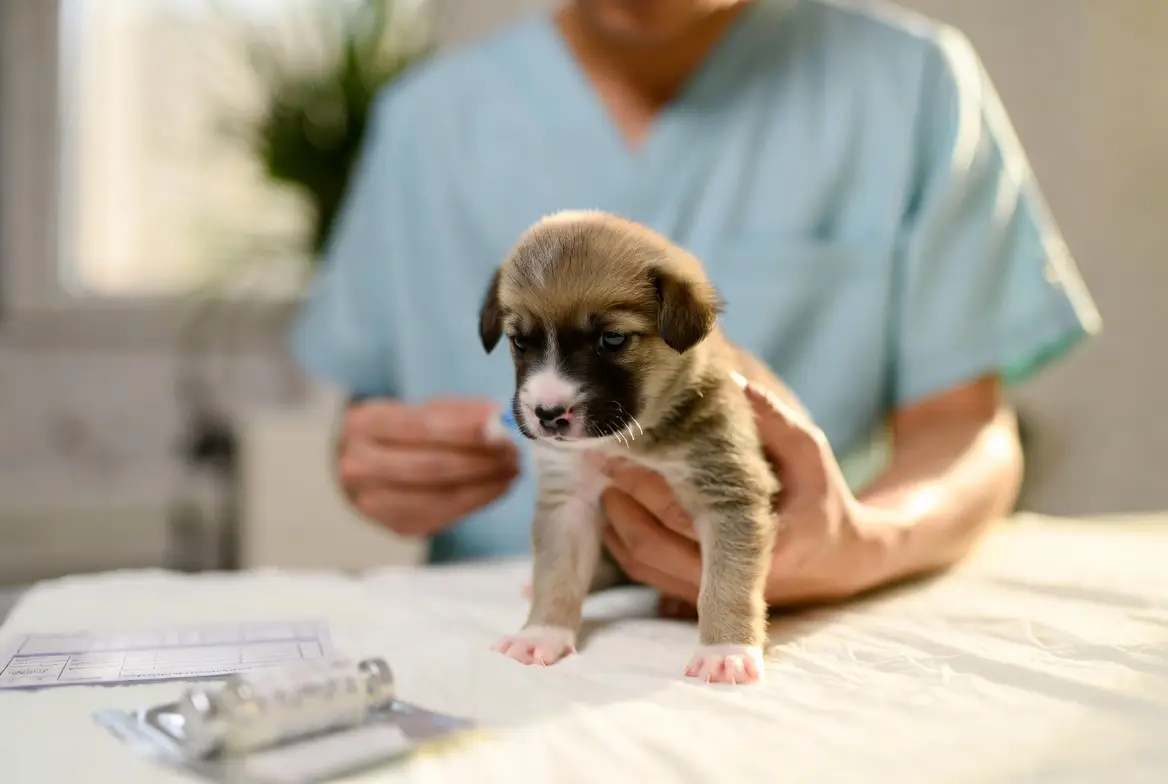
Our friends just got their first puppy.
She is a little black mongrel-mix the vet thinks is about seven weeks old, and she is exactly as chaotic as that age sounds. They messaged us at 11pm on a Wednesday with the only question first-time puppy parents really have: "So what shots does she need, when, and how much will this actually cost us?"
The honest answer takes a minute to explain, because most of what you'll find online is a US schedule with US prices and US assumptions about rabies risk. None of that maps cleanly to the Philippines. We have different vaccines on the shelf, different diseases in the environment, different laws on the books, and very different price tiers across cities.
So here is the actual schedule that works for dogs in the Philippines in 2026, with what we have learned from running Shimmer's records on Pawdex for almost four years and from sitting in a lot of vet waiting rooms with her. No filler. No copy-pasted Western guide.
Why the PH schedule is genuinely different
Three local realities shape every vaccine decision a Filipino dog parent makes:
Rabies is endemic. The Philippines has not eliminated dog-mediated rabies. The Department of Health records around 200 to 300 human rabies deaths per year, almost all from dog bites. That is why the Anti-Rabies Act of 2007 (RA 9482) makes anti-rabies vaccination a legal requirement for every dog in the country, indoor or outdoor. This is not optional. It is also the one shot where the city veterinary office will often vaccinate your dog for free or for a token fee.
Leptospirosis is everywhere in the rainy season. Lepto is a bacterial infection carried in rat urine that contaminates standing water — exactly the kind of street puddle every dog in the Philippines walks through from June to October. Lepto can be fatal in days and can jump to humans through a dog's saliva or urine. This is why the cheaper 4-in-1 puppy shots are not enough here, and why most PH vets default to 5-in-1 or 6-in-1 for the puppy series, with the higher-spec 8-in-1 for adult boosters.
Parvovirus outbreaks happen every year. Every May through August, vet group chats in Cebu, Manila, and Davao light up with the same posts — multiple parvo cases in one barangay, often unvaccinated street puppies that infect other puppies in the neighborhood. Parvo is brutal, costs ₱30,000 to ₱60,000 to treat with hospitalization, and is preventable with a complete puppy series. Skipping the third booster because the puppy "looks fine" is how most parvo deaths happen in this country.
If you take nothing else from this article, take this: a US-style "two-shot puppy series" is not enough in the Philippines. We need the full three to four-shot series, on schedule.
(Have a cat too? The shots and diseases are completely different — see our separate cat vaccination schedule for the Philippines. And if you're brand new to this, our first vet visit guide walks through vaccines, deworming, and tick prevention in one plan.)
The schedule, week by week
6 to 8 weeks old — first 5-in-1 (or 6-in-1)
This is your puppy's first real vet visit. Before this age the puppy is still protected by antibodies from the mother's milk; after this age that protection starts fading and the puppy becomes susceptible to parvo and distemper.
What the shot covers:
- D — Distemper
- H — Hepatitis (canine adenovirus)
- P — Parvovirus
- Pi — Parainfluenza
- L — Leptospirosis (one serovar in 5-in-1; two in 6-in-1)
PH price range: ₱400 to ₱700 at most private clinics. City veterinary offices sometimes offer it at a subsidy. Pet Express's in-store vet service is on the higher end of this range but convenient if you are already mall-running.
What to bring: a small fresh towel, treats your puppy already likes, and a notebook or phone to write down the brand, lot number, and date. You will need that information again at month 12 and every year after.
9 to 12 weeks — second 5-in-1 (or move to 6-in-1)
This is the booster of the first shot. It is not optional, and the gap should not stretch beyond four weeks from the first dose. This is where a lot of busy first-time parents lose the plot — the puppy seems healthy, life gets busy, and the second shot slides to week 14 or 16.
If you are paying out of pocket and want to upgrade one shot in the series to the broader 6-in-1, this is a reasonable visit to do it.
PH price range: ₱400 to ₱800.
What to ask your vet: can we also schedule the next two visits at the same time, on the calendar? Locking in the dates early is the single biggest predictor of whether a puppy actually finishes the series.
12 to 16 weeks — third booster plus first anti-rabies shot
This is the visit a lot of Philippine dogs never make. The puppy is bigger, bouncier, eating well, and the parents have started to relax. Don't skip this one. The third 5-in-1 booster is what locks in long-term immunity to parvo and distemper; without it, your dog is essentially relying on the residual protection from shots one and two through their entire first year. That is when most preventable parvo cases happen.
At this same visit (or within a week of it), your puppy can get the first anti-rabies vaccine. Most vets will not give anti-rabies before 12 weeks. After 12 weeks, get it on the calendar.
PH price range for the combo visit: ₱500 to ₱1,200 if you do both 5-in-1 booster and anti-rabies at the same time. Many city veterinary offices will give the anti-rabies portion free of charge, including Mandaue City's well-known ₱100 lifetime program (which bundles registration, microchip, and the lifetime anti-rabies vaccine into a single fee — one of the best deals in the country if you live in or near Cebu).
6 months — optional broad-spectrum booster
Some vets recommend a 6-month booster, especially for dogs in high-risk environments — rescue homes, dogs that go to daycare, dogs in flood-prone areas. This is a judgment call, not a requirement. Ask your vet what makes sense for your specific dog.
Year 1 and every year after — the annual booster
Once your dog turns one, the schedule simplifies dramatically. You will visit the vet for:
- Annual 5-in-1, 6-in-1, or 8-in-1 booster — usually around ₱600 to ₱1,000. We use 8-in-1 for Shimmer because of the lepto coverage; in flood-prone Cebu neighborhoods that extra protection has earned its keep.
- Annual anti-rabies booster — RA 9482 specifies annual vaccination unless the vet certifies a three-year vaccine was used. The single-year shot is the default at most PH clinics. Bring your card.
- Bordetella (kennel cough) if your dog is around other dogs — ₱600 to ₱900. This is the shot grooming salons, daycares, and boarders ask for. Get it if your dog has any social calendar at all.
- Heartworm prevention — this is technically a parasite preventive, not a vaccine, but it is part of the annual conversation. Monthly oral options (Heartgard, Interceptor) run about ₱300 to ₱500 per month; the injectable (Proheart) is about ₱2,500 to ₱4,000 for a one-year shot. Heartworm is widespread in the Philippines because mosquitoes are everywhere; do not skip this one.
What every shot actually protects against
The list of vaccine names can read like alphabet soup. Here is what each one is actually doing for your dog:
- Distemper — a viral disease that attacks the nervous system. Often fatal in puppies. The "D" in 5-in-1.
- Hepatitis (CAV) — canine adenovirus, hits the liver. Less common today thanks to widespread vaccination, but the protection is worth keeping. The "H" in 5-in-1.
- Parvovirus — the one that scares every PH vet group chat from May to August. Highly contagious, attacks the gut, kills unvaccinated puppies in days. The "P" in 5-in-1.
- Parainfluenza — a respiratory virus, part of the "kennel cough" complex. The "Pi" in 5-in-1.
- Leptospirosis — bacterial, spreads through contaminated water and rodent urine, can be fatal and can jump to humans. The "L" in 5-in-1 covers one serovar; the L in 8-in-1 covers three.
- Anti-rabies — legally required in the Philippines. 100% fatal if symptoms appear, in both dogs and humans. Annual booster.
- Bordetella (kennel cough) — bacterial respiratory infection. Required by virtually every boarder, groomer, and daycare. Annual booster.
- Coronavirus (canine) — a separate virus from the one in human news; this one causes a mild gut illness in puppies. Included in 6-in-1 and above. Not a high-stakes vaccine for most adult dogs.
The PH-specific traps most fur parents fall into
After watching a lot of friends go through the puppy phase, these are the patterns we see most often:
Losing the paper vaccination card. This is the big one. Every PH clinic still hands out a small folded card with stickers for each shot, and that card is the only proof your dog is vaccinated for boarding, grooming, daycare, or vet handoff. We have personally watched friends spend two weekends in a row driving back to old clinics asking for shot histories before a flight. This is exactly why we eventually built Pawdex's Vax Vault — a photo of every card lives in your pet's passport, and the next time a boarder asks for "proof of vaccination" you have a permanent link to share instead of a frantic search through your gallery.
Mixing clinics without bringing records. Each clinic builds your dog's record from what you tell them. If you switch from Clinic A to Clinic B and don't bring proof of the earlier shots, Clinic B will often restart the series to be safe. That is two extra shots and ₱1,500 you did not need to spend.
Skipping the 16-week booster because the puppy "looks fine." This is the most expensive shortcut in the Philippines. A ₱600 booster you skipped becomes a ₱40,000 parvo hospitalization, and that's only if the puppy makes it. Don't.
Buying vaccines at the agrivet and DIY-ing the injection at home. People do this to save money. We get it. But vaccines need cold-chain handling that most agrivets cannot guarantee, and an injection done incorrectly is worse than no injection at all because it produces a false sense of safety. Please don't.
Assuming the city vet covers everything. City veterinary offices in the Philippines mostly cover anti-rabies. The full puppy series — the 5-in-1 boosters, the bordetella, the lepto coverage — is almost always private-clinic territory. Budget accordingly.
Where to actually get vaccines in the Philippines
A quick reality check on options:
- City veterinary offices. Cheapest. Often free for anti-rabies. Usually do not cover the full 5-in-1 series. Excellent for the legally required shot; not the full solution.
- Private clinics. The most common path. Prices vary by city — Manila and Cebu metro clinics generally charge ₱400 to ₱800 per shot; provincial clinics can be 20 to 30 percent lower.
- Pet Express in-store vet services. Convenient if you live in a mall-served area. Slightly higher prices but you can also do supply shopping in the same trip.
- Home-service vets. Increasingly common in Cebu, Manila, and Davao. Add about ₱300 to ₱500 to clinic prices for the travel fee; saves you from dragging a fearful puppy into a clinic full of other dogs.
If you are on a budget and live near a city hall, do the anti-rabies at the city vet (free or near-free) and the rest at a private clinic. That combination keeps the annual cost manageable.
How we track Shimmer's schedule
We are a little biased, but: vaccination records are the single thing every fur parent eventually needs and almost never has handy. Shimmer's Pawdex passport holds every shot, every brand, every lot number, and every expiry date. When a boarder asks for proof, we share a link. When a vet asks "when did she get her last anti-rabies," we open the passport. When a checkpoint or city ordinance asks for documentation, we have it.
For pet parents on the Pro plan, Pawdex also sends an email reminder seven days before a shot expires and on the day it expires — which is exactly the kind of thing that catches the bordetella booster before a 7am boarding drop-off, not after.
Your first pet's passport is free. The reminders and the rest of the Pro features come later, when and if you want them. The vaccination tracking itself is just a thing every fur parent should have, and we wanted to make sure cost was never the reason a record got lost.
A note for fur parents thinking about boarding or travel
If you ever plan to board your dog, fly them domestically, or take them across regional borders, the vaccination card becomes paperwork. Most boarders require bordetella from the last 6 to 12 months. Most domestic flights require a Bureau of Animal Industry shipping permit, which itself requires proof of current anti-rabies and a vet-issued health certificate.
We will write a separate pillar on travel paperwork. For now, the simplest move is: get the annual booster and bordetella locked into your calendar at the same visit, save the card to your pet's digital passport, and you will breeze through every gate you ever need to walk through.
And if your dog ever gets out — which happens to the most careful pet parents, as we learned with Shimmer — a current vaccination record on a QR collar tag is what tells a finder, a vet, or a city pound that your dog is safe to handle and worth returning quickly.
The whole schedule fits on one piece of paper and costs less than most people fear. The puppy series is the expensive year — about ₱2,500 to ₱4,500 total if you do everything privately. After that, the annual booster routine is roughly ₱1,500 to ₱2,500 per year, which is genuinely affordable insurance against diseases that kill dogs in this country every single month.
Get the calendar locked in. Save the cards somewhere you won't lose them. And the next time a friend with a brand-new puppy messages you at 11pm asking what to do — you'll have a real answer.

Founder of Pawdex. Pet parent to Shimmer and Sigbin. Writes honest pet-care guides for Filipino pet parents — no fluff, real prices, real stories.