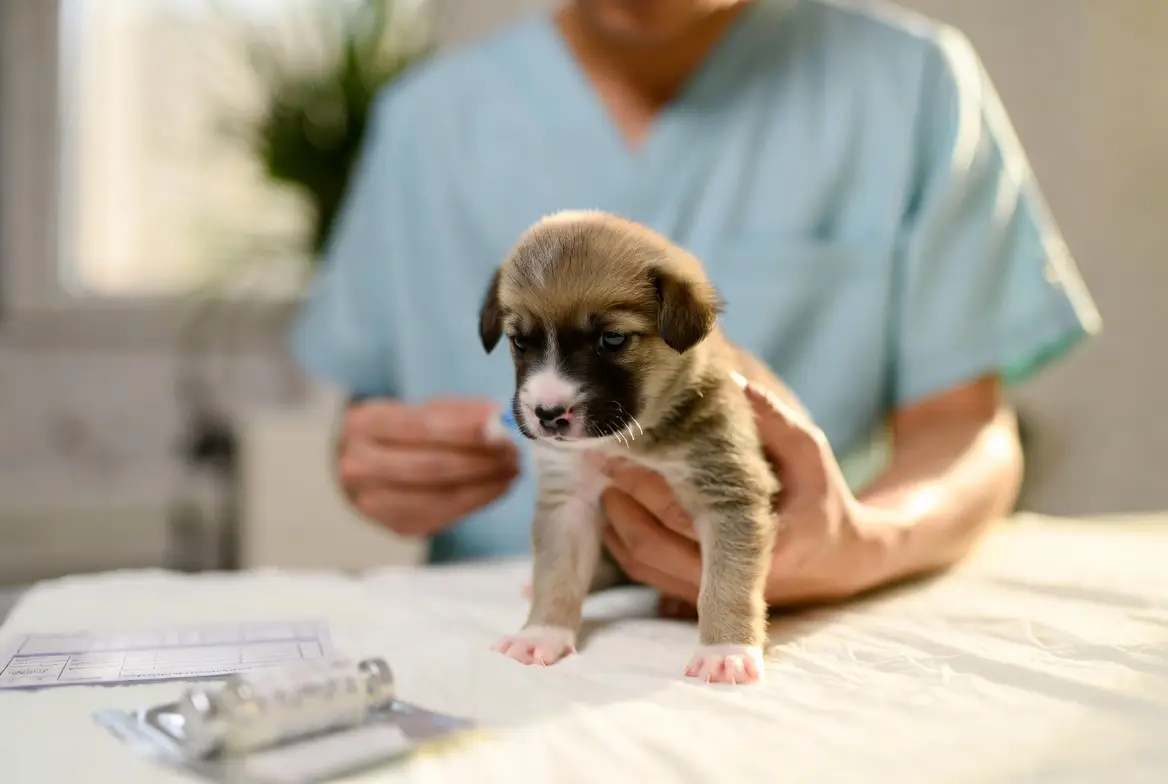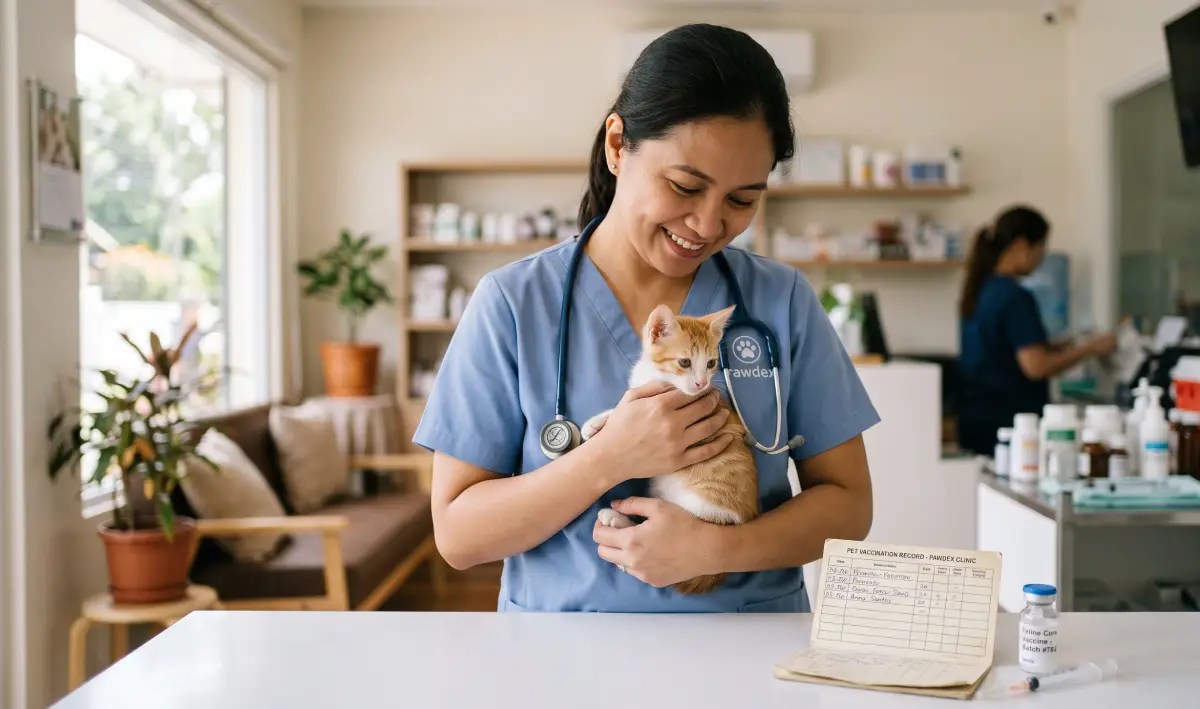
My sister adopted a kitten from under a neighbor's parked car last month.
Tiny, flea-bitten, and loud — the kind of rescue that happens to a lot of Filipino households whether they planned for a cat or not. Her first message to me wasn't about food or a name. It was: "Ano bang bakuna kailangan nito, kailan, at magkano?"
It's the right question, and the honest answer is harder to find than it should be. Almost every "cat vaccination schedule" you'll find online is written for the US — different diseases weighted differently, different prices, and the quiet assumption that every cat is an indoor-only pet in a temperate house. That's not our reality. So here's the actual schedule that works for cats in the Philippines in 2026, with real price ranges and no copy-pasted Western filler.
If you also have a dog, our dog vaccination schedule for the Philippines is a separate guide — cats and dogs need genuinely different shots, so don't assume one maps onto the other.
The core cat vaccines, in plain terms
Cats have two things every Filipino cat parent should treat as non-negotiable, plus a couple of optional shots.
FVRCP — the core combo (the "3-in-1"). This single shot protects against three viruses at once:
- Feline viral rhinotracheitis (feline herpesvirus) — the endless sneezing, runny eyes, and upper-respiratory misery that spreads fast in multi-cat homes and rescues.
- Calicivirus — another respiratory virus, with painful mouth ulcers.
- Panleukopenia (feline distemper / "cat parvo") — the scary one. It's the feline equivalent of parvo: highly contagious, brutal, and often fatal in kittens. It's also extremely hardy in the environment, which is the whole reason indoor cats aren't safe from it.
You'll also see a 4-in-1, which is the same combo plus feline chlamydia protection.
Rabies. Always a separate shot. Rabies is endemic in the Philippines and fatal once symptoms appear — for the cat and for any human it bites. Cats absolutely can carry and transmit it. Many LGUs run free anti-rabies days that include cats, so ask your city veterinary office.
FeLV (feline leukemia) — optional. A non-core shot most vets recommend for cats that go outdoors, live in a colony, or share a home with an FeLV-positive cat. If your cat is strictly indoors and alone, your vet may reasonably skip it.
The schedule, week by week
Timing matters more than most first-time cat parents realize, because a kitten's borrowed immunity from its mother fades right in the window where these viruses do the most damage.
Here's the schedule most Philippine vets follow:
| Age | What happens |
|---|---|
| 6–8 weeks | First FVRCP (3-in-1 or 4-in-1). Deworming usually starts around here too. |
| 9–12 weeks | Second FVRCP booster. |
| 12–16 weeks | Third FVRCP booster to close out the kitten series. |
| ~12 weeks and up | Anti-rabies shot, per your clinic's protocol. |
| Every year after | Annual FVRCP + rabies boosters (and FeLV if your vet recommended it). |
A few real-world notes for PH cats specifically:
- Rescues with unknown ages get their series based on the vet's best estimate of age and a physical exam. A "close enough" start is far better than waiting.
- Deworming runs alongside vaccines, not instead of them — worms are near-universal in kittens here, and a heavily parasitized kitten shouldn't be vaccinated until it's stable.
- Never vaccinate a visibly sick kitten. Sneezing, diarrhea, or lethargy means treat first, vaccinate once recovered. A vaccine works by training a healthy immune system; giving it to a sick kitten does little and can stress an already-struggling body.
What it actually costs in the Philippines
Real 2026 price ranges, so you can budget honestly:
- FVRCP (3-in-1 / 4-in-1): roughly a few hundred pesos up to a little over ₱1,000 per dose at private clinics, depending on the brand and the clinic.
- Anti-rabies: often around ₱190 to ₱500 at private clinics — and frequently free at LGU vaccination drives.
- Full kitten series: realistically in the low thousands of pesos total across the three-to-four visits, including consults and deworming.
Two ways Filipino cat parents keep this reasonable without cutting corners: get rabies at a free LGU anti-rabies day when one runs in your city, and do the core FVRCP series at your regular clinic where the record stays consistent. Reputable local guides like Purina Philippines publish similar schedules if you want a second reference.
The part everyone forgets: keep the record
Here's the mistake I see over and over. The cat gets its full kitten series, everyone's relieved — and then the little paper vaccination card gets water-damaged, lost in a move, or left at a clinic that has since closed. A year later, at booster time or before boarding, nobody can prove what the cat has had. So it gets restarted, or worse, skipped.
This is exactly why we built Pawdex around a digital pet passport. You log each shot — brand, date, next-due — once, and it's there forever, on your phone, backed up, and shareable with any vet, groomer, or pet hotel that asks. Your first pet's passport is free, and you can add vaccine reminders so you're never the one guessing whether the rabies booster is overdue.
It matters even more for cats than dogs, because cats hide illness so well that the vaccination record is often the only hard data you and your vet have to work from.
If your cat ever gets outside
Indoor cats escape. It happens to the most careful households, and cats are much harder to find than dogs because they hide rather than wander — we wrote a full guide to finding a lost cat in the Philippines for exactly that panic.
An up-to-date rabies record and a way to identify your cat are part of the same safety net as vaccinating in the first place. A QR pet tag or microchip means that if someone does find your cat, they can reach you and confirm it's protected — and if you're weighing your options, here's what microchipping actually costs in the Philippines. Vaccinating, identifying, and keeping the records are three parts of one habit — not three separate chores.
Start the series on time, keep every date written down somewhere that won't get lost, and you've done the hard part of keeping a Philippine cat healthy. The rest is just showing up for the boosters. (Own a specific breed? Our Persian cat care guide covers the extra grooming and health needs of the Philippines' most popular pedigree cat.)
Sources:

Founder of Pawdex. Pet parent to Shimmer and Sigbin. Writes honest pet-care guides for Filipino pet parents — no fluff, real prices, real stories.