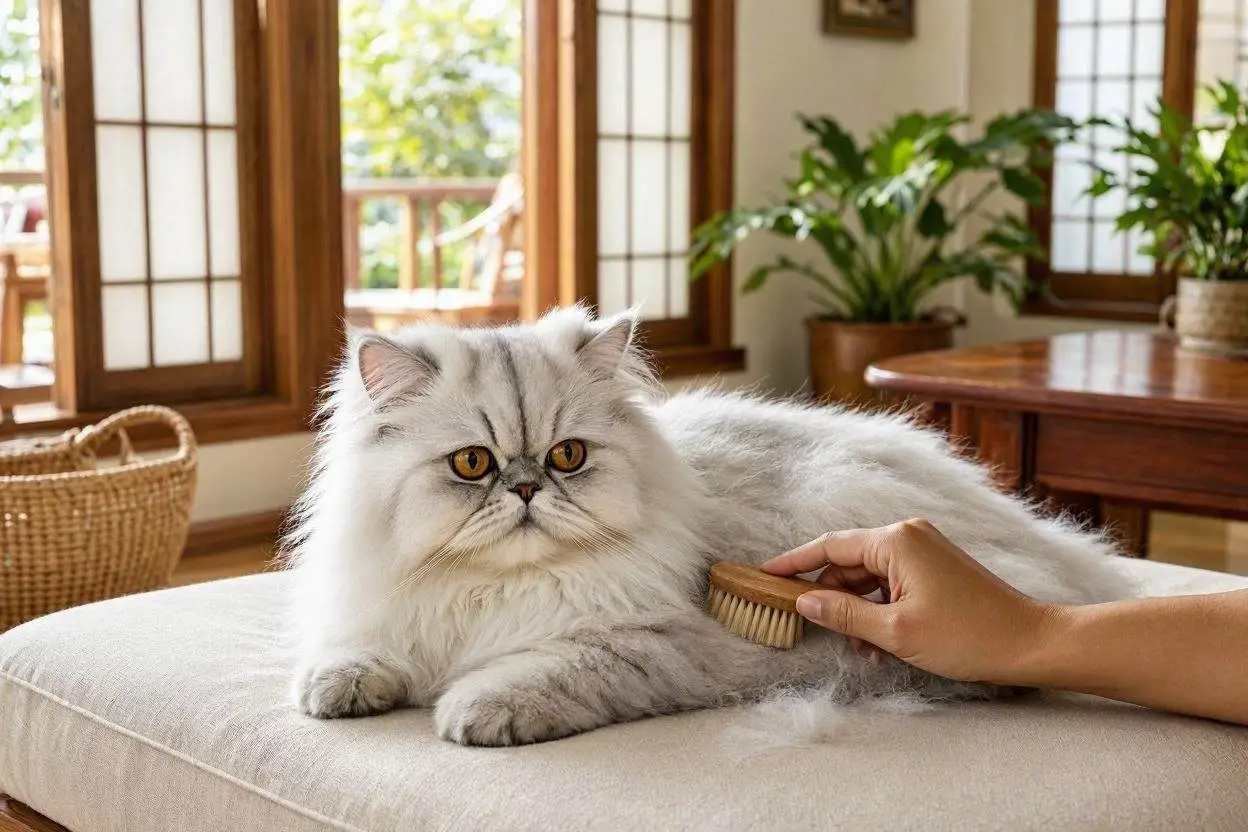
If dogs have had their turn, here's for the cat people — and specifically for the most luxurious cat in the room. The Persian is calm, quiet, affectionate, and staggeringly beautiful, with that long flowing coat and famously sweet, flat face. In the Philippines they're one of the most sought-after pedigree cats, and as a serene indoor companion, few cats are lovelier to live with.
They're also the most high-maintenance cat you can choose, and — like the flat-faced dog breeds — they come with some real health considerations. The good news is that Persians ask for a very predictable kind of work: a daily routine, done consistently, keeps them healthy and comfortable. Here's the honest guide to that routine, the health, the heat, and the costs.
Daily grooming is the deal — no exceptions
Let's be completely clear, because this is where Persian ownership succeeds or fails: a Persian needs grooming every single day. That gorgeous long, fine coat tangles and mats with astonishing ease, and in Philippine humidity it's worse. Mats aren't just ugly — they pull painfully at the skin, trap moisture and dirt against it, and can lead to sores and infections. Once a coat is badly matted, the fix is often a trip to the vet or groomer to shave it out under sedation, which is stressful and costly.
The routine:
- Brush gently every day, working through the whole coat down to the skin. A few minutes daily prevents mats that would take hours (and possibly sedation) to remove later.
- Bathe occasionally and dry completely — a damp long coat in humid weather invites skin problems.
- Consider a practical trim. Many PH Persian owners keep a shorter "lion cut" or teddy trim, especially in hot months — it's far easier to maintain and cooler for the cat. A groomer can do this.
- Watch the rear. Long-coated cats can get feces caught in the coat around the bottom; keep that area trimmed and clean for hygiene.
If daily brushing sounds like more than you'll realistically do, please choose a short-haired cat instead — it's the kindest decision for both of you.
The flat face: eyes, breathing, and heat
The Persian's sweet squashed face is a brachycephalic feature, and like the flat-faced dog breeds, it brings specific needs.
- Eyes need daily cleaning. Persians tear excessively because their flattened faces distort the tear ducts, and that constant moisture stains the fur and can cause skin infection in the folds below the eyes. Wipe the eye area gently every day with a clean, damp cloth.
- Breathing and heat. The short muzzle makes cooling and breathing less efficient, so a Persian is more heat-sensitive than the average cat. Open-mouth breathing or any respiratory distress in a cat is a warning sign — see a vet, don't wait it out.
- Dental crowding. A short jaw means crowded teeth and earlier dental disease. Include dental care and checkups.
Doll-face vs peke-face: a choice worth understanding
Not all Persians have the same face, and it matters for health, not just looks. Decades of breeding for an ever-flatter face produced the extreme "peke-face" (ultra-flat) Persian you see in shows — and the flatter the face, the worse the breathing, the tear-duct problems, and the heat sensitivity tend to be. The older, more moderate "doll-face" (traditional) Persian has a longer, more natural muzzle, and generally suffers far fewer of these issues while still being unmistakably a fluffy Persian.
For a pet in a hot climate especially, a doll-face or a more moderately built Persian is often the kinder, healthier choice — they cope better with the heat and have fewer eye and breathing struggles. If you're choosing a kitten, ask the breeder about the line, look at how open the nostrils are and how much the eyes water, and don't assume the flattest face is the "best" one. It's usually the opposite.
Keeping a Persian cool and indoors
A long coat plus a flat face makes the tropics a double challenge, so keep a Persian as an indoor cat in a cool, well-ventilated or air-conditioned space. Constant fresh water, cool surfaces to lounge on (tile, a spot near the aircon), and a well-groomed coat (a matted coat can't shed heat) are the essentials. Indoor living also protects that valuable, not-very-street-smart cat from traffic, disease, and theft — Persians are not cats that should roam.
Health and choosing a Persian
The breed's headline inherited issue is polycystic kidney disease (PKD) — cysts that slowly destroy kidney function over years. The important part for buyers: responsible breeders DNA-test their breeding cats for PKD, so ask to see it. This single question separates a careful breeder from a careless one. Beyond PKD, watch for the brachycephalic breathing issues, dental disease, excessive tearing, and certain heart and eye conditions the breed can carry.
Because kidney health is a lifelong watch-point, regular vet checkups matter, and so does a cat that's vaccinated and parasite-protected from the start. Get the foundations right with a proper first vet visit, the cat vaccination schedule, deworming, and safe tick and flea prevention — and note the warning in that guide that many dog flea products (permethrin) are toxic to cats, so only ever use cat-safe products on your Persian.
Feeding
Feed a quality cat food appropriate to your Persian's life stage, and keep fresh water always available — good hydration is especially important given the breed's kidney predisposition, so many owners include wet food to boost water intake. Persians can be a little picky and their flat face can make some kibble shapes hard to pick up (there are breed-specific kibbles shaped for this). Keep them lean; a calm indoor cat is easy to overfeed, and extra weight worsens both heat tolerance and joint comfort.
Is a Persian right for you?
Choose a Persian if you want a serene, gentle, indoor companion and you'll genuinely do the daily grooming and eye care. They're arguably the perfect condo cat by temperament — quiet, affectionate, low-energy, content to be beautiful on your couch. Just remember the trade: you're swapping an active cat's exercise demands for a Persian's grooming and health routine. If you can't commit to the daily coat and eye care, a short-haired cat — or a wonderfully hardy rescued Puspin — will be far happier with you, and you with them.
A pedigree cat with a lifelong health story
A Persian can live well into its teens, and with a kidney condition to monitor, dental needs, and years of grooming and vet visits, the health record genuinely matters. A digital pet passport keeps the vaccination history, weight, PKD and kidney monitoring notes, the medical timeline, and a vet-ready PDF export all in one place — the real medical file a pedigree cat accumulates over a lifetime, ready to hand any vet in seconds.
And even an indoor cat can slip out a door or window, so clip or attach a scannable QR tag and consider a microchip, so a lost Persian — a cat that won't survive long on the street — can be reunited with you fast.
Give a Persian the daily brush, the eye care, and a cool indoor life, and you get the most tranquil, elegant companion a home can hold, for many years. Start your Persian's Pawdex passport and keep their whole story in one place from day one.
Founder of Pawdex. Pet parent to Shimmer and Sigbin. Writes honest pet-care guides for Filipino pet parents — no fluff, real prices, real stories.